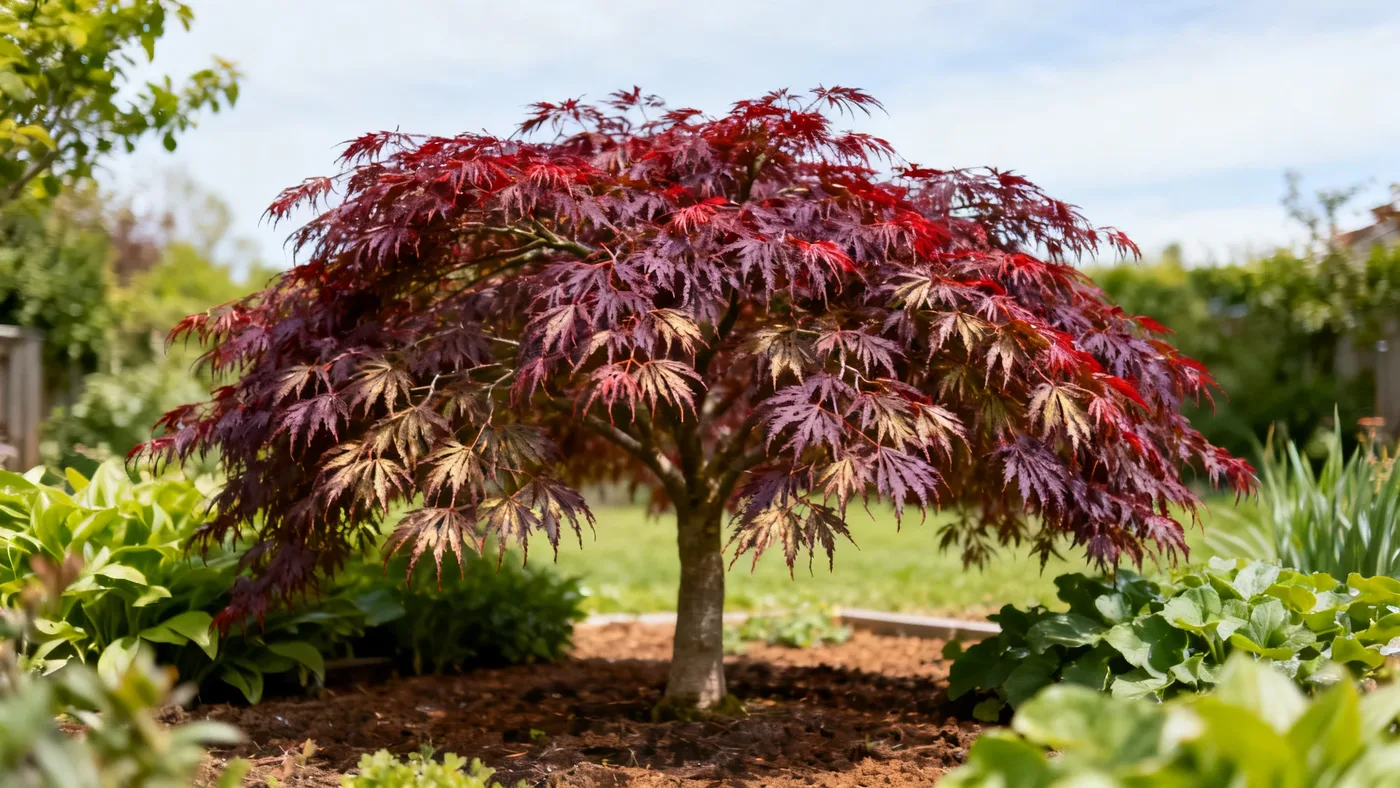
7 Common Crimson Queen Japanese Maple Problems and How to Fix Them
Crimson Queen Japanese Maple brings striking red foliage and graceful weeping form to any landscape, but like all plants, it faces its share of challenges. The good news: most common crimson queen japanese maple problems are preventable or manageable once you understand what's happening. This guide walks you through the seven issues that show up most often, what causes them, and the practical steps to address each one.
1. Leaf Scorch: When Foliage Turns Brown and Crispy
Leaf scorch is the most frequent complaint from Crimson Queen growers, and it's almost always environmental rather than a disease. You'll see it as brown, papery edges on leaves, often starting mid-summer during hot spells or windy periods. The leaves may look almost burned, and in severe cases, entire sections of foliage turn brown before dropping early. A stressed tree can lose most of its canopy in weeks.
Leaf scorch happens when the plant loses water faster than the roots can replenish it. Crimson Queen suffers during four specific conditions: intense afternoon sun exposure (especially in zones beyond 7), persistent dry winds, inconsistent watering, or soil that drains too quickly. The plant's finely dissected leaves have high surface area, making them vulnerable to drying out. While leaf scorch won't kill the tree, it stresses the plant and weakens growth the following year.
The fix is straightforward: provide afternoon shade in hot-summer climates and ensure consistent soil moisture during dry spells. Water deeply and slowly to reach the root zone, then check soil moisture 3 to 4 inches down before watering again. Apply 2 to 3 inches of organic mulch around the base (keeping it 6 inches away from the trunk) to stabilize soil moisture and temperature. In zone 9 or hotter areas, afternoon shade becomes essential, not optional.
Takeaway: Consistent moisture plus afternoon shade prevents most cases of crimson queen maple leaves turning brown from scorch.
2. Verticillium Wilt: The Soil-Borne Disease That Can Be Fatal
Verticillium wilt is a serious fungal disease found in many soils, and it's one of the few japanese maple diseases that can kill the plant outright. You'll recognize it by sudden wilting of branches (often one side of the tree first), yellowing leaves, and eventual dieback. Unlike leaf scorch, wilting happens even when soil is moist, and the problem progresses over weeks before branches die back completely.
The pathogen lives in soil indefinitely, entering through the roots and clogging the plant's vascular system. Stressed trees (newly planted, drought-stressed, or in poor soil) are far more vulnerable than well-established ones. There's no cure once the disease takes hold. The only reliable prevention is site selection: never plant Crimson Queen in a location where susceptible plants like tomatoes, potatoes, eggplant, or other maples died from wilt in the past.
If you suspect verticillium wilt, do not replant another Acer in that spot. Consult your local extension service to confirm the diagnosis. Proper siting, rich well-draining soil, and consistent care reduce risk significantly. Some nurseries can test soil for the presence of verticillium if you're concerned about a planting location.
Takeaway: Site selection is your only defense against japanese maple diseases like verticillium wilt; avoid locations where other susceptible plants have failed.
3. Japanese Beetles: Skeletonized Leaves and Quick Damage
Japanese beetles are one of the most destructive crimson queen japanese maple pests in the eastern United States. Adult beetles appear in early summer, June through August, and feed on the tissue between leaf veins, leaving a lacy, skeletonized look. A large population can defoliate a tree in weeks. The damage is unmistakable: leaves look like they've been punched full of tiny holes, with only the veins remaining.
Beetle populations build in lawns with thick thatch and well-watered turf, where grubs develop underground. Crimson Queen is highly attractive to Japanese beetles compared to many other maples. Handpicking beetles early in the morning (when they're sluggish) into soapy water is effective for small infestations. For larger problems, spray neem oil or insecticidal soap on the underside of leaves every 7 to 10 days starting at first sign of beetles.
For prevention, reduce lawn thatch and avoid overwatering turf around the tree, which discourages grub development. Do not use pheromone traps near the Crimson Queen, as they attract more beetles to the area. Japanese beetles are persistent, so monitoring during summer is key. You may need multiple treatments through the season, but the tree typically recovers fully once beetle pressure subsides in late August.
Takeaway: Scout for beetles weekly in early summer and treat promptly with neem oil or handpicking to prevent skeletonized foliage.
4. Aphids and Scale Insects: Small Pests With Big Effects
Aphids and scale insects are among the most common japanese maple pests, though they're often overlooked until damage shows up. Aphids cluster on new growth and leaf undersides, feeding on sap and excreting sticky honeydew that coats leaves and attracts sooty mold. Scale insects look like tiny bumps or shells on stems and branches; they feed beneath a protective waxy coating that shields them from spray.
Light infestations rarely require treatment, especially if natural predators like ladybugs, parasitic wasps, or lacewings are present. For heavier populations, spray the tree with strong water from the hose to dislodge aphids, or apply neem oil to both sides of leaves every 7 to 10 days. Scale insects are trickier: apply horticultural oil in late winter or early spring when the tree is still dormant and scales are most vulnerable. Summer oil sprays can burn foliage in heat, so timing matters.
Monitor the tree regularly from spring through early fall, checking leaf undersides for clusters of aphids and new growth for curling or yellowing leaves. Avoid broad-spectrum insecticides, which kill beneficial insects and can cause mite outbreaks as a rebound effect.
Takeaway: Check leaf undersides monthly during the growing season; most aphid and scale problems respond to water spray or neem oil if caught early.
5. Poor Drainage and Root Rot: A Fatal Mistake at Planting
Crimson Queen Japanese Maple demands well-drained soil, and soggy conditions are among the most common crimson queen japanese maple problems that gardeners create themselves through poor site selection. Root rot develops when soil stays waterlogged for days at a time. You'll notice yellowing leaves, slow growth, a mushy or foul smell at the soil line, and eventually dieback. Unlike the quick progression of wilt, root rot is a slow decline that's heartbreaking to watch.
The plant needs rich loam high in organic matter, with a soil pH between 5.5 and 6.5. Never plant it in heavy clay or in a depression where water collects. If your native soil is clay or compacted, amend the planting hole generously with 30 to 50 percent aged compost or well-rotted bark. Ensure the tree is planted at the same depth it was growing in the nursery container, not deeper. Many trees fail because they're planted too deep, which buries the graft union or suffocates the roots.
If root rot has already started, it's difficult to reverse. You cannot save a tree with advanced rot. However, you can prevent it by choosing a well-drained site and watering wisely. Allow the top 2 to 3 inches of soil to dry slightly between waterings. In containers, use potting soil with extra perlite or bark to ensure fast drainage. Hardscape in low spots or install a rain garden to redirect water away from the tree's root zone.
Takeaway: Plant in well-drained soil amended with organic matter, never in low spots or heavy clay, and let soil dry slightly between waterings.
6. Winter Dieback in Zone 5: Protecting Young Trees From Cold
Crimson Queen Japanese Maple is rated hardy to USDA zones 5 through 8, but young or newly planted trees in zone 5 can experience winter dieback if exposed to hard freezes without protection. You'll see it as dead branch tips or entire branch sections that don't leaf out in spring. While the tree usually survives and regrows from lower branches, dieback delays maturity and creates a sparse, uneven form that takes years to fill in.
Zone 5 winters regularly dip to minus 20°F or below, which stresses trees that haven't had time to harden off properly. Newly planted Crimson Queens are especially vulnerable because their roots haven't established deeply enough to draw moisture and nutrients when the ground is frozen. Late-season growth in fall (from excess nitrogen fertilizer or warm spells) is also risky, as it produces tender new stems that freeze easily.
Protect young trees by wrapping the trunk loosely with burlap in late fall, or building a windbreak using burlap or shade cloth on the north and west sides if you're in a windy site. Never fertilize after midsummer in zone 5. Apply a thick mulch layer after the ground freezes (3 to 4 inches, not touching the trunk) to insulate the roots. Once the tree reaches 8 to 10 feet tall and has been in the ground for 5 or more years, it's far less likely to experience serious dieback.
Takeaway: In zone 5, wait until the tree is well-established before expecting perfect winter hardiness; young trees benefit from winter protection.
7. Girdling Roots: The Nursery Problem That Follows You Home
Girdling roots are the result of poor handling before you even plant the tree. When a Crimson Queen sits in a nursery pot too long without repotting, roots circle the root ball and eventually strangle the plant's vascular system. You may not notice the problem until years later, when the tree stops growing, weakens, or dies despite good care. It's one of the most frustrating crimson queen japanese maple problems because it's hard to diagnose after purchase.
Inspect the root ball carefully before buying. Gently slip the tree from its pot and look for circling roots. If roots spiral tightly around the sides or form a mat at the bottom, the tree was pot-bound for too long. You can still save it by gently teasing apart the roots and planting it properly, but prevention is easier. Buy from reputable nurseries that rotate and upsize their plants regularly. Trees from quart, number 1, or number 3 containers are standard; if the tree feels very heavy for its pot size or roots poke out the drainage holes, it's been confined too long.
At planting, never bury the root ball deeper than it was in the nursery container. Spread the outer roots gently outward into the amended backfill. In the first two years, monitor growth closely. Slow establishment or weak new growth can signal root problems that need correction, and you may be able to rescue the tree if you act quickly.
Takeaway: Choose nursery stock with healthy, loose root systems and gently loosen circling roots before backfilling at planting time.
Quick Reference: Common Crimson Queen Japanese Maple Problems at a Glance
| Problem | Symptoms | When It Appears | Quick Fix |
|---|---|---|---|
| Leaf Scorch | Brown, papery leaf edges; early defoliation | Mid-summer during heat or wind | Afternoon shade, consistent moisture, mulch |
| Verticillium Wilt | One-sided wilting, yellowing; progressive dieback | Any time; spreads over weeks | Prevention via site selection; avoid contaminated soil |
| Japanese Beetles | Skeletonized leaves; lacy appearance | June through August | Handpick, neem oil spray every 7-10 days, weekly monitoring |
| Aphids & Scale | Curled leaves, sticky honeydew, bumps on stems | Aphids: spring through fall; Scale: year-round | Water spray, neem oil, horticultural oil in dormancy |
| Poor Drainage & Root Rot | Yellowing, mushy roots, foul smell at soil line | Any season; slow decline | Plant in well-drained soil, amend clay, improve site drainage |
| Zone 5 Winter Dieback | Dead branch tips; sparse leaf-out in spring | Late winter after hard freezes | Winter protection for young trees: burlap wrap, windbreak |
| Girdling Roots | Poor growth years after purchase; weak vigor | Detected at purchase; damage shows over years | Choose healthy nursery stock, loosen circling roots at planting |
Learn More About Crimson Queen Care
Most crimson queen japanese maple problems are avoidable with proper site selection, consistent watering, and regular monitoring. For a comprehensive guide to planting, watering, fertilizing, and long-term care, see Crimson Queen Japanese Maple Care: The Complete Growing Guide. Early detection and quick action on pests and cultural problems make the difference between a thriving, beautiful specimen and an ailing tree.