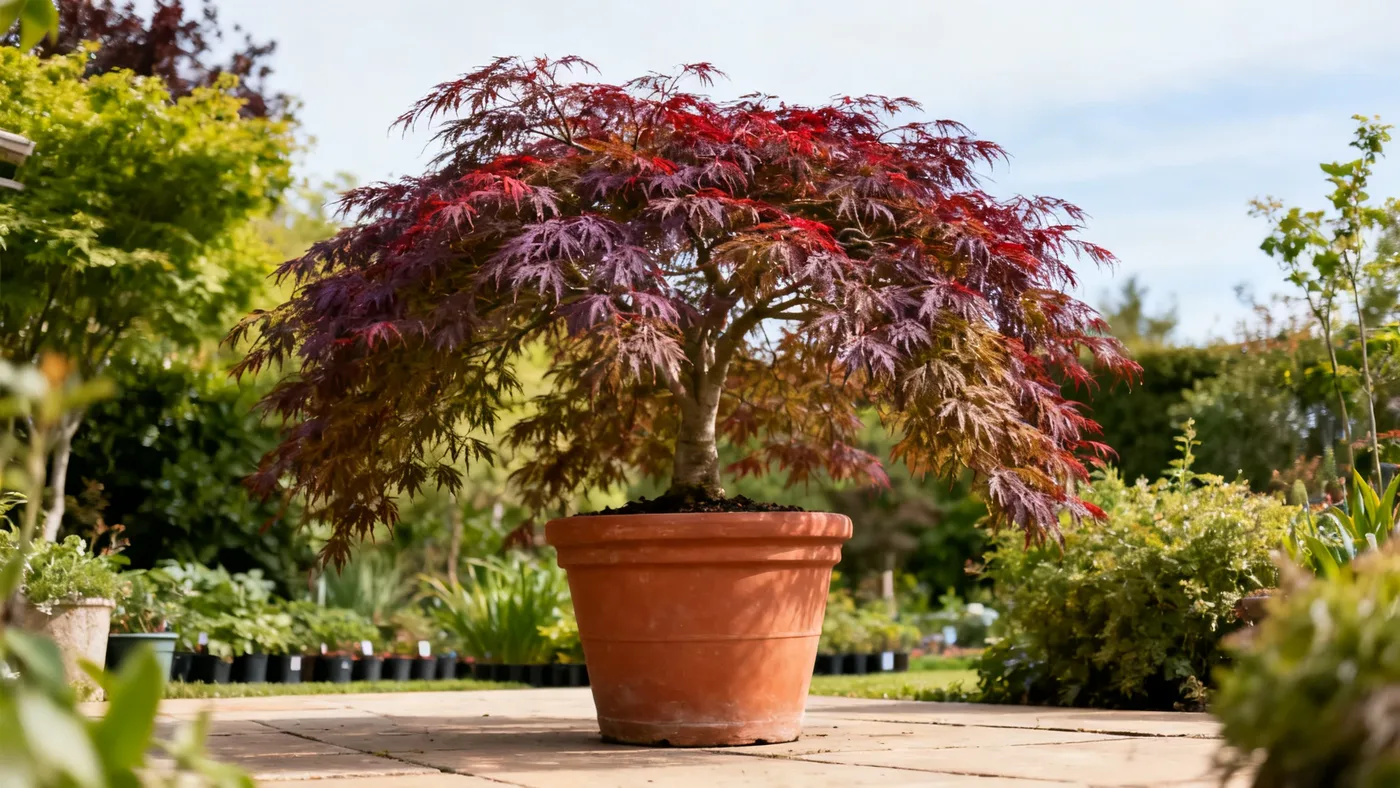
Winter Care for Crimson Queen Japanese Maple, In-Ground and Potted
Crimson Queen Japanese Maple is cold hardy in USDA zones 5 through 8, though younger plants and container specimens need deliberate winter protection to thrive. Unlike trees built for harsh winters, this weeping laceleaf cultivar is more vulnerable to frost damage when improperly sited or cared for. The good news: with straightforward preparation in fall and attention during dormancy, your Crimson Queen can sail through cold months without dieback or root damage.
This guide covers everything you need to protect both in-ground and potted Crimson Queen maples, from mulching strategy to winter watering to recognizing and preventing common cold-season problems.
Why Winter Protection Matters for Crimson Queen
Crimson Queen is a cultivar of the species Acer palmatum, and while the species itself is hardy, this particular form's finely dissected, lacy foliage and graceful weeping habit make it somewhat tender compared to upright Japanese maple varieties. Young trees, especially those in their first few years after planting, have not yet developed the root strength to survive extended freezes without extra care. Even mature specimens benefit from thoughtful winter management because roots in a pot or newly planted trees lack the insulating mass of soil around them that established in-ground trees enjoy.
Winter dieback on younger plants in colder zone 5 sites is a documented risk. This does not mean the tree will die, but rather that some branch tips or even entire small limbs may perish if exposed to hard freezes without protective covering. Proper preparation prevents most of this damage.
Zone Considerations: Know Your Limits
If you live in USDA zones 5 or 6 and your Crimson Queen is under 5 years old, plan for active winter protection. Zones 7 and 8 gardeners typically see milder winters where young trees suffer less, though protection still reduces risk. Some nurseries report success in zone 9 when the tree sits in afternoon shade and receives consistent moisture, but cold hardiness there is less certain, so treat zone 9 plantings as experimental and provide maximum shelter.
Check your local microclimate before deciding on protection level. A tree planted at the bottom of a cold pocket (where cold air pools) needs more care than one on higher ground or against a south-facing wall. If your property sees wind tunnels or extended stretches below 0 degrees Fahrenheit, plan on heavier mulching and wrapping for young specimens.
In-Ground Winter Care
Mulch Application (The Foundation of Winter Protection)
A properly applied mulch layer is your first line of defense for in-ground Crimson Queen maples. Mulch insulates the root zone and moderates soil temperature swings that can damage tender roots.
Materials you will need:
- Organic mulch (compost, shredded bark, or aged wood chips)
- Landscape fabric or cardboard (optional, to suppress weeds)
- Gloves
- A rake or garden fork to even the mulch
Step-by-step mulching process:
- Time the application. Apply mulch in late fall, after the tree has dropped most or all of its leaves and the soil temperature begins to cool. In most of zones 5 through 8, this means October through November. Do not apply mulch while the ground is already frozen.
- Clear debris around the base. Remove fallen leaves, sticks, and other debris from a 3- to 4-foot radius around the trunk. This keeps the mulch layer clean and reduces rot risk at the base of the tree.
- Lay down landscape fabric (optional). If your site has persistent weed pressure, lay cardboard or landscape fabric in a ring around the base. This step is not mandatory but helps suppress winter weeds that might compete for moisture.
- Apply 3 to 4 inches of organic mulch. Spread aged compost, shredded bark, or wood chips to a depth of 3 to 4 inches, starting 3 to 4 inches away from the tree's trunk (do not mulch directly against the bark). The mulch should extend outward to the tree's drip line or slightly beyond if the tree is young and small. For a young tree in its first year after planting, a 2- to 3-foot radius is sufficient; for an established tree, extend it to the full canopy spread.
- Smooth and settle. Rake the mulch to an even surface and water it lightly to help it settle. It will compress over the winter, so a slightly generous initial depth is fine.
- Refresh in late winter if needed. By late February or early March, check the mulch depth. If it has compressed to 1.5 inches or less, add another 1.5 to 2 inches. Do this before growth resumes in spring.
What to expect: The mulch layer will keep soil temperatures more stable and prevent repeated freeze-thaw cycles that can heave young trees out of the ground or damage roots. Older mulch will begin to break down and contribute organic matter to the soil, enriching it.
Watering Before Dormancy
In fall, before the soil freezes, give your in-ground Crimson Queen a deep watering if the past few weeks have been dry. The goal is to ensure the root zone enters winter with adequate moisture, which helps the roots survive freezing temperatures. A well-hydrated soil also buffers against temperature extremes.
Apply water slowly and deeply, wetting the soil to a depth of 8 to 12 inches. Once the ground freezes solid, watering is not possible and usually not needed. The tree's moisture needs are minimal when dormant. Do not over-water, as soggy soil in winter can promote root rot, especially if drainage is poor.
Pruning Timing
Prune dead, crossing, or downward-growing branches in late fall to midwinter dormancy, when the tree's shape is fully visible without foliage. Winter pruning wounds heal slowly, so keep pruning minimal. Remove only what is obviously damaged or structurally problematic. Avoid heavy pruning, as it will push weak regrowth in spring that is vulnerable to late frosts. For detailed pruning guidance, see our complete growing guide.
Winter Care for Potted Crimson Queen
Potted Crimson Queen maples face greater cold stress than in-ground trees because the roots are exposed above soil level and lack the insulating mass of earth around them. In containers, roots can freeze solid at temperatures that would not damage in-ground roots. If you are growing your Crimson Queen in a pot, especially in zones 5 or 6, plan on extra winter measures.
Container Drainage and Root Protection
First, confirm your pot has drainage holes. Sitting water in a pot can freeze and damage roots. In winter, this is even more critical because frozen water can crack the pot and expand within the soil ball, causing root damage.
To protect a container tree:
- Move the pot to a sheltered location. Position it against a south- or west-facing wall of your house, garage, or shed. This provides both wind protection and passive solar warmth. Avoid low-lying areas where cold air pools.
- Wrap the pot in insulation. Use burlap, cardboard, or bubble wrap to wrap the sides and bottom of the container. Leave the top open so water can drain if there is winter precipitation. The goal is to insulate the root ball, not create a sealed environment. Secure wrapping with twine.
- Group containers together if you have multiple plants. Clustering pots creates a more moderate microclimate than isolating them. The combined mass of soil and containers moderates temperature swings.
- Elevate the pot slightly. Place the pot on pot feet or a small platform so the base is not in direct contact with cold pavement. This prevents cold from conducting through the ground into the root ball.
Winter Watering for Container Plants
Potted trees still need some water during dormancy, but far less than during the growing season. Soil in containers dries faster than in-ground soil because it is exposed to air on all sides.
Water only when the top inch of soil feels dry, usually no more than once every 2 to 4 weeks in winter. Water in the morning on a day when temperatures will stay above freezing, so the soil has time to drain before nightfall. Cold, soggy soil promotes root rot.
Placement and Microclimate
The best location for a potted Crimson Queen in winter is a spot that gets some winter sun but is sheltered from harsh winds. An eave, porch, or corner protected by walls is ideal. If you have an unheated garage or cold frame, that works too, provided the plant gets some light. Never place it in complete darkness for months on end, as it can lose vigor.
In colder zones (5 and 6), consider moving the pot into an unheated but frost-protected space like a garage, shed, or cold frame once temperatures drop below 10 degrees Fahrenheit consistently. This is not the same as bringing it indoors to heat; you want the tree to remain dormant, not to wake up prematurely.
Common Winter Damage and How to Prevent It
Winter Dieback
Winter dieback is the death of small branches or branch tips due to prolonged freezing, often exacerbated by drying winds or harsh sun on frozen bark. Young Crimson Queen maples in zone 5 are most at risk, but even zone 7 trees can suffer tip damage in severe winters.
Prevention: Mulch the base, avoid late-summer fertilizing (which pushes tender new growth), and provide afternoon shade in cold-prone zones. Do not prune in spring to remove dead tips immediately; wait until late spring (May) to confirm which tips are truly dead and which may resprout.
Frost Crack
Frost crack is a longitudinal split in the bark caused by rapid temperature swings. A sunny day followed by a hard freeze can crack the wood. Young Crimson Queen maples with thin bark are vulnerable.
Prevention: Plant in a location that does not see early morning sun exposure on days after frost. The south side of a building, where the tree warms quickly, then freezes hard at night, is risky. A location on the east or north side, which warms more gradually, is safer. Wrapping young tree trunks loosely with burlap in the first year after planting can also reduce risk.
Deer Browse
Crimson Queen is moderately resistant to deer, but when snow is deep and other food is scarce, hungry deer may browse tender twigs and bark. The finely dissected foliage is somewhat less attractive to deer than broad leaves, but it is not deer-proof.
Prevention: In high-deer-pressure areas, wrap young trees with tree guards or netting in late fall. Leave it in place until spring growth hardens off. Alternatively, install a sturdy fence around the tree or the wider garden area. Repellents have limited effectiveness in winter because rain and snow wash them away.
Spring Assessment and Recovery
As temperatures warm in spring (typically April to May in zones 5 through 8), your Crimson Queen will break dormancy. New red-purple foliage will emerge from buds. Do not panic if some branch tips appear brown or remain bare; many of them may resprout from lower buds once the tree is sure warm weather has arrived.
Remove the mulch layer gradually in late spring after the soil has thawed and new growth is underway. If you applied heavy mulch, pull it back to 1 to 2 inches by May. This allows the soil to warm and prevents fungal issues from persistent moisture.
Inspect your tree for any frost cracks, broken branches, or other damage. Prune out dead wood only if it is clearly dead (no green under the bark). If you are unsure, wait another week or two. Many apparently dead tips will resprout if you give them time.
Quick Reference: Winter Care Checklist
| Task | Timing | In-Ground | Potted |
|---|---|---|---|
| Apply mulch | October-November | 3-4 inches around base | Not applicable |
| Deep watering | Late fall, before freeze | Water deeply once | Water deeply once |
| Winter watering | December-February | Only if dry spell occurs | Every 2-4 weeks if soil is dry |
| Container wrapping | November | Not applicable | Wrap pot in burlap |
| Pruning | December-February | Remove dead/crossing branches only | Remove dead/crossing branches only |
| Reposition pot (cold zones) | December-January | Not applicable | Move to shelter or unheated building |
| Refresh mulch (if compressed) | Late February-March | Add 1-2 inches if needed | Not applicable |
| Spring cleanup | April-May | Pull back mulch to 1-2 inches | Move pot back to full sun |
With these steps in place, your Crimson Queen should come through winter intact. The graceful cascading branch structure will be fully visible during dormancy, rewarding you with winter interest while the tree rests and prepares for a flourishing spring emergence. For ongoing care through the growing season, consult our complete growing guide and light requirements guide.