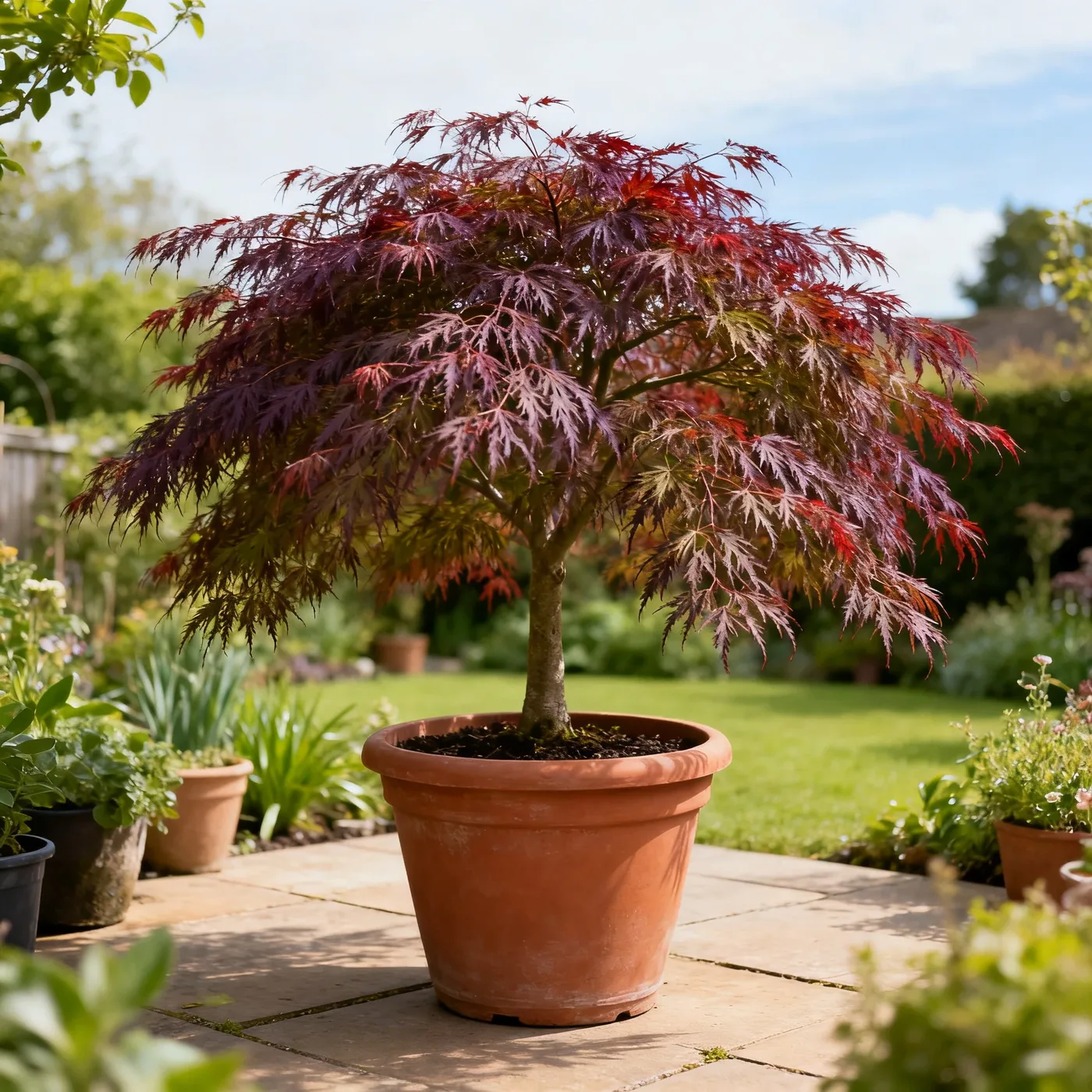
Crimson Queen Japanese Maple
Acer palmatum var. dissectum 'Crimson Queen'
Crimson Queen Japanese Maple, 1-Gallon Nursery Plant
This size is not in the online store yet. Ask about availability and we will reply with current stock.
- Brilliant crimson to scarlet fall color on fine, laceleaf foliage
- Graceful weeping form reaches 8-10 ft tall over 15-20 years, perfect for focal point plantings
- Hardy in zones 5-8, excellent for containers, Japanese gardens, and poolside settings
About this plant
The Crimson Queen is a weeping laceleaf Japanese maple with brilliant crimson fall color and fine, dissected foliage. This deciduous shrub-form maple shines as a specimen focal point in landscape beds, Japanese and zen gardens, or container plantings. The weeping habit and slow growth make it ideal for smaller yards and poolside plantings where a graceful accent is needed.
Your plant arrives in a 1-gallon nursery container with established root development. Plant immediately or store in partial shade with consistent moisture. First week: keep soil evenly moist but not waterlogged. Choose a planting spot with full sun to partial shade, adding afternoon shade protection in hot climates. Dig a hole twice the width of the container and plant at the same soil level.
Crimson Queen Japanese Maple at a glance
| Botanical name | Acer palmatum var. dissectum 'Crimson Queen' |
|---|---|
| Plant type | deciduous shrub/small tree (weeping, laceleaf form) |
| USDA zones | 5-8, some growers list to 9 with afternoon shade |
| Mature height | 8-10 ft over 15-20 years |
| Mature width | 10-12 ft (typically wider than tall due to weeping habit) |
| Sun | full sun to partial shade; benefits from afternoon shade in hot-summer climates to prevent leaf scorch |
| Water | regular, consistent moisture; not drought tolerant once dry spells extend, avoid soggy soil |
| Bloom time | spring, April-May |
| Bloom color | small reddish-purple flowers, not ornamentally significant |
| Growth rate | slow, roughly 6-12 inches per year |
| Deer resistance | rated moderately resistant, though not deer-proof; browsing varies by region and deer pressure |
| Best planting time | early spring or early fall, avoiding peak summer heat |
Container sizes explained
| #1 / 1 Gallon | A trade one gallon pot (about 6.5 inches). One to two seasons older than a quart, with an established root system. |
|---|---|
| #2 / 2 Gallon | A trade two gallon pot. Common for peonies and perennials that need root room; usually blooms the first or second year. |
| #3 / 3 Gallon | A trade three gallon pot (about 10 inches). A well-developed shrub or small tree, often 2 to 4 feet tall on arrival. |
Questions before you buy
Does this plant come in other sizes?
This plant is currently offered in a 1-gallon nursery container. This size features established root development and is ready to plant immediately upon arrival.
When should I plant it after it arrives?
Plant immediately upon arrival if conditions allow, or keep the plant in partial shade with consistent moisture for a few days. Avoid leaving it in direct sun or allowing the soil to dry out. Spring through early fall are the best planting seasons in most climates.
How large does a Crimson Queen Japanese Maple grow?
This plant reaches a mature size of 8-10 feet tall and 10-12 feet wide over 15-20 years. The weeping habit means it typically grows wider than tall. Growth is slow, averaging 6-12 inches per year, making it ideal for smaller landscapes and container plantings.
Does Crimson Queen need full sun or can it handle shade?
It thrives in full sun to partial shade. In hot-summer climates, afternoon shade helps prevent leaf scorch and keeps the foliage color vibrant. Morning sun with afternoon protection is ideal in regions with intense heat.
Which hardiness zones is this maple suitable for?
Crimson Queen is hardy in USDA zones 5-8. Some growers extend its range to zone 9 with afternoon shade. Check your local zone before purchasing to ensure success in your area.
What care does it need in the first year?
Keep soil consistently moist but not waterlogged, especially during the first season as roots establish. Plant in rich, well-drained soil with organic matter and mulch around the base to retain moisture and regulate soil temperature.