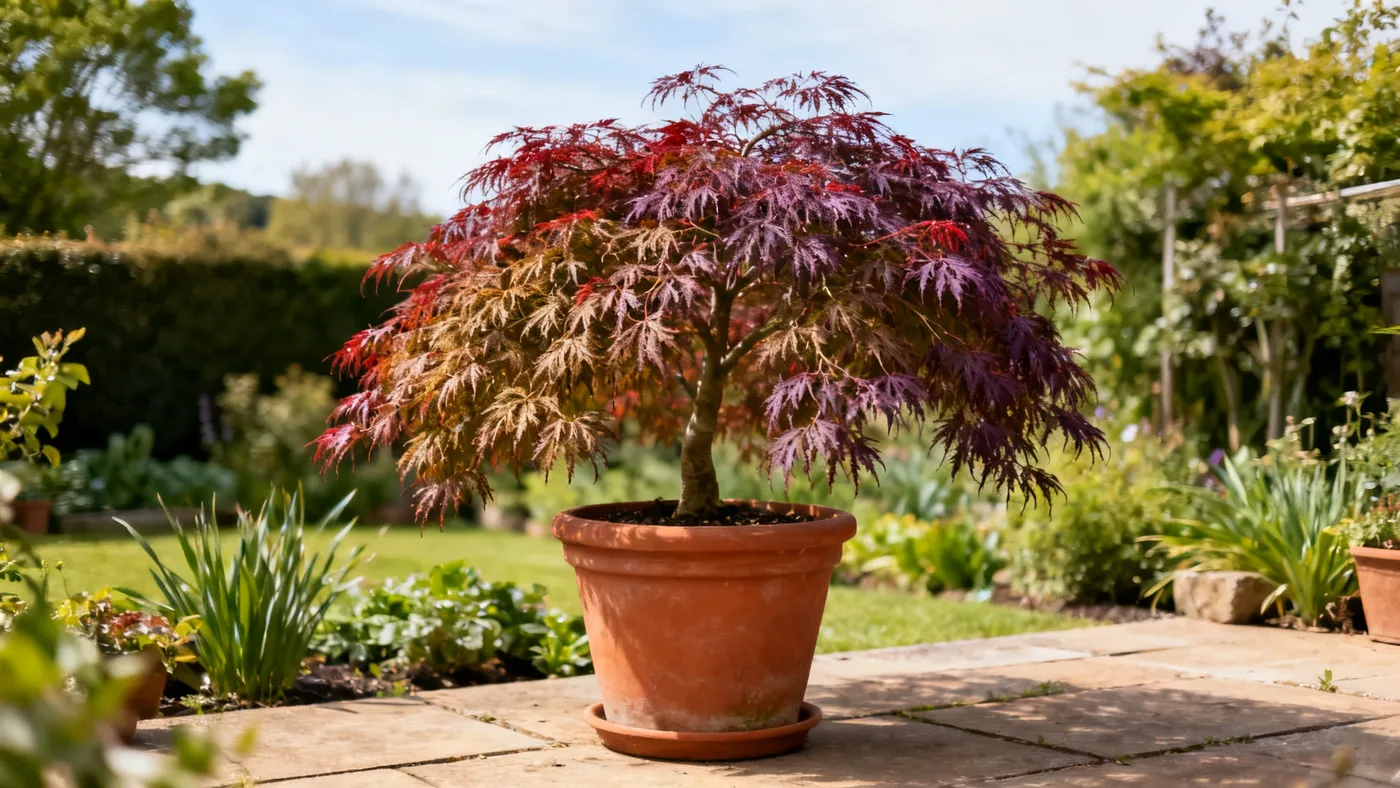
Buying Crimson Queen Japanese Maple: Pot Sizes and What to Look For
When you're ready to buy a Crimson Queen Japanese Maple (Acer palmatum var. dissectum 'Crimson Queen'), you're making an investment in a tree that will anchor your garden for decades. These weeping laceleaf maples reach 8 to 10 feet tall and 10 to 12 feet wide over 15 to 20 years, so selecting a healthy specimen matters from the start. This guide walks you through pot sizes, what a quality plant looks like, common pitfalls, and where to buy.
Understanding Container Sizes for Crimson Queen Japanese Maple
Nursery-grown Crimson Queen maples are typically sold in three common sizes: quart containers (1 qt), #1 pots, and #3 containers. Each size represents a different stage of maturity and price point.
Quart-sized plants are the smallest and least expensive option. These young specimens are often 12 to 18 inches tall and may consist of a single stem or a branching framework just beginning to develop. A quart plant is a good choice if you're patient and prefer to watch the tree establish its weeping form over time. However, these require careful nursery pot management to avoid root girdling, a problem that develops when roots circle the soil in the pot for too long without transplanting.
#1 containers hold roughly 1 gallon of soil and typically contain plants 18 to 36 inches tall with an established branch structure. This size offers a balance between price and immediate garden impact. The plant is old enough that its natural weeping habit is visible, but it's still young enough to recover quickly from transplanting. #1 pots are the most common size for retail nurseries and garden centers.
#3 containers are the largest standard nursery size, roughly 3 gallons, and hold plants that are 3 to 5 feet tall with a well-developed, full canopy. These mature specimens make an immediate visual impact in the landscape. The tradeoff is price: #3 plants cost significantly more than #1 or quart specimens. However, if you want a specimen that looks established in year one, this size is worth the investment.
Specialty nurseries occasionally offer larger specimen plants in 5-gallon or air-pot containers, but these are less common and command premium prices. Before committing to a size, consider your timeline. A #1 plant will reach near-mature landscape size in 10 to 15 years with proper care; a quart plant takes a few years longer.
What to Look for When Buying
A healthy Crimson Queen starts with what you see above ground and below. Before you commit to buying, examine these key indicators of plant quality.
Leaf Color and Structure
Crimson Queen foliage should be rich red-purple when it emerges, with finely dissected, lacy leaves. At the nursery or garden center, look for vibrant color. Pale or yellowish leaves suggest nutrient stress or inadequate light at the nursery. A few brown leaf tips are normal, especially if the plant has been in transit or in dry conditions, but extensive scorching or desiccation is a red flag. In summer heat, the foliage may bronze-green slightly, which is normal and not a defect.
Examine the branch structure. The weeping form should be apparent even in a young plant. Branches should cascade gracefully downward, not stand stiffly upright. If you're looking at a quart or #1 specimen, the weeping habit may be subtle, but it should be there. In #3 and larger plants, the cascading growth should be obvious.
Root Health and Girdling
Girdling roots are a serious problem in Crimson Queen Japanese Maples, particularly in young plants that have sat in nursery pots too long. Girdling occurs when roots circle the soil repeatedly, strangling the trunk and stunting or killing the tree once planted. To check for this, gently tip the plant and look at the root collar where the trunk meets the soil. If roots are visibly wrapping around the trunk, or if you see a distinctly narrowed section where a root has choked the trunk, keep shopping. Carefully remove the plant from its pot if possible and inspect the root mass. Healthy roots are light-colored and firm. If the root ball is dense and roots are tightly coiled, the plant has been in its pot too long.
A healthy root ball should feel evenly moist but not waterlogged. If water pours out or the soil falls apart, the plant has been overwatered. If the soil is bone-dry and pulls away from the pot sides, the tree is stressed.
Branch Framework
Look for a plant with multiple branches, not a single whip-like stem. Even in a quart plant, a forked or multi-branched structure indicates that the nursery has managed the specimen for shape. The branches should not have visible damage, cankers (sunken or cracked areas of bark), or broken limbs. Small branch scars from pruning are normal and fine.
Pest and Disease Signs
Inspect the leaves for signs of pests like spider mites (tiny webbing on leaf undersides) or aphids (sticky residue, curled leaves). Common maple pests include Japanese beetles and scale insects. Look for unusual spots, powdery coatings, or oozing from branches. While minor pest presence is sometimes manageable, a heavily infested plant is not worth the trouble.
Red Flags to Avoid
Several problems are deal-breakers when buying Crimson Queen Japanese Maple for sale. Avoid plants with:
- Girdling roots (visible wrapped roots at the trunk base)
- Severely scorched, brown, or desiccated foliage
- A single, unbranched stem in a #1 or larger container
- Cankers or cracked bark on branches
- Dense infestations of pests or obvious disease
- Waterlogged or bone-dry soil that will not recover quickly
- Root ball that is severely pot-bound (roots completely solid and circling)
These issues take months or years to recover from, and some (like advanced girdling) may be fatal. A healthy plant starts with a healthy nursery specimen.
Price Points and What to Expect
Crimson Queen Japanese Maple pricing varies by region, season, and supplier. In most markets, expect quart plants to cost $15 to $35 each, #1 containers to range from $35 to $75, and #3 specimens to run $100 to $250 or more. Specialty nurseries, online retailers, and plant sales by mail may have different pricing. Larger specimen plants and rare suppliers may command premium prices.
Online shopping requires extra caution. Ensure the retailer has a reputation for careful packing and live-arrival guarantees. Mail-order plants are often smaller than local garden center finds, so confirm the pot size and height before purchasing. Spring and fall are peak selling seasons and usually offer the best selection, though spring planting is generally preferable in colder zones (5 and 6) to give the tree time to establish before winter.
Price alone is not a quality indicator. A bargain-basement plant with girdling roots or pest problems will cost more in time and replacement than a healthier specimen at a higher price. Conversely, the most expensive plant in the garden center is not necessarily the best choice if it has been in its pot for too long.
Where to Buy Crimson Queen Japanese Maple
Local Nurseries and Garden Centers
Your best option for a hands-on inspection is a reputable local nursery or garden center. Staff can answer questions about the plant's history, when it arrived, and any specific care needs. You can examine the root ball, leaf quality, and overall health before buying. Most local retailers also stand behind their plants with some form of replacement guarantee if the tree fails to establish.
Specialty Japanese Maple Growers
Some nurseries specialize in Japanese maples and maintain larger selections of Crimson Queen and related cultivars. These growers often have deeper expertise and may offer specimen sizes and plant quality beyond what's available at big-box retailers. Search online for Japanese maple nurseries in your region or contact your local extension service for recommendations.
Online and Mail-Order
Mail-order and online retailers offer convenience and access to plants that may not be locally available. Reputable online nurseries ship bare-root, container, or potted specimens with protective packaging. Read reviews and confirm their shipping guarantees. Shipping costs can be significant, so factor that into your total price. Spring and early fall are the safest shipping windows to avoid heat or frost stress in transit.
Botanical Gardens and Plant Sales
Some botanical gardens and native plant societies host annual sales featuring quality nursery stock, including specialty maples. These events offer well-grown specimens, expert advice, and competitive pricing. Plants are often propagated by hand and may have better root health than mass-produced garden center stock.
Container Growing and Long-Term Storage
If you're buying a Crimson Queen Japanese Maple for container planting rather than in-ground, or if you need to store your plant before planting, choose a larger pot with excellent drainage. A #3 plant or smaller can be grown indefinitely in a container 18 to 24 inches deep and wide, with regular watering and feeding. The key is never to let the tree become pot-bound. Re-pot every 2 to 3 years in spring into slightly larger containers with fresh, well-draining loam rich in organic matter.
In colder zones (5 and 6), container-grown Crimson Queens need extra winter protection. Roots freeze more easily in pots than in ground. In harsh winters, move the pot to a sheltered location or wrap it with frost cloth.
After You Buy: Planting Timeline
Ideally, plant your new Crimson Queen within a few weeks of purchase. If you must wait, keep the plant in light shade, water it consistently, and do not let it sit in the nursery pot for more than a month or two. The longer it sits, the greater the risk of root girdling and nutrient depletion. When you're ready to plant, choose a location with full sun to partial shade and well-drained soil. For a deeper understanding of care after planting, see our complete growing guide.
If you're still deciding between sizes, remember that a healthy #1 specimen will grow at a rate of roughly 6 to 12 inches per year and will reach near-mature landscape size in 10 to 15 years. You're not just buying a tree; you're buying a long-term investment in your garden's beauty.
Quick Reference: Buying Checklist
| Inspection Point | What to Look For | Red Flag |
|---|---|---|
| Foliage Color | Rich red-purple, finely dissected leaves | Pale, yellow, or extensively scorched foliage |
| Branch Structure | Multiple branches with graceful weeping form visible | Single stem; stiff, upright growth; broken branches |
| Root Collar (Base) | Healthy, unwrapped roots; no visible constriction | Roots circling or girdling the trunk |
| Root Ball Condition | Moist, firm, roots light-colored and flexible | Waterlogged, bone-dry, or completely solid root ball |
| Pests and Disease | No webbing, spotting, cankers, or pest damage | Visible insect infestations, powdery mildew, oozing cankers |
| Pot Duration | Plant recently potted or in container fewer than 2 seasons | Plant clearly root-bound or sitting in pot for years |
Container Sizes at a Glance
| Container Size | Typical Height | Typical Price Range | Best For |
|---|---|---|---|
| Quart (1 qt) | 12-18 inches | $15-$35 | Patient gardeners, budget-conscious buyers |
| #1 Container | 18-36 inches | $35-$75 | Most gardeners; balance of price and impact |
| #3 Container | 3-5 feet | $100-$250+ | Immediate landscape impact, specimen displays |
You can learn more about how Crimson Queen matures over time in our guide to Crimson Queen Japanese Maple size and growth.