Crimson Queen Japanese Maple Care: The Complete Growing Guide
Key Takeaways
- Crimson Queen Japanese Maple is a slow-growing weeping laceleaf form that reaches 8-10 feet tall and 10-12 feet wide over 15-20 years
- Hardy in USDA zones 5-8 (zone 9 possible with afternoon shade in hot climates)
- Prefers full sun to partial shade; afternoon shade prevents summer leaf scorch in hot regions
- Requires rich, well-drained soil with pH 5.5-6.5 and consistent moisture
- Minimal pruning needed; remove only dead or crossing branches in late fall through midwinter
- Low salt tolerance and moderate drought tolerance once established
Table of Contents
- Understanding Crimson Queen Japanese Maple
- Hardiness Zones and Climate Suitability
- Sunlight Requirements
- Soil Preparation and Planting
- Watering and Moisture Management
- Seasonal Care Calendar
- Pruning and Branch Training
- Common Issues and Solutions
- Quick Reference Guide
Understanding Crimson Queen Japanese Maple
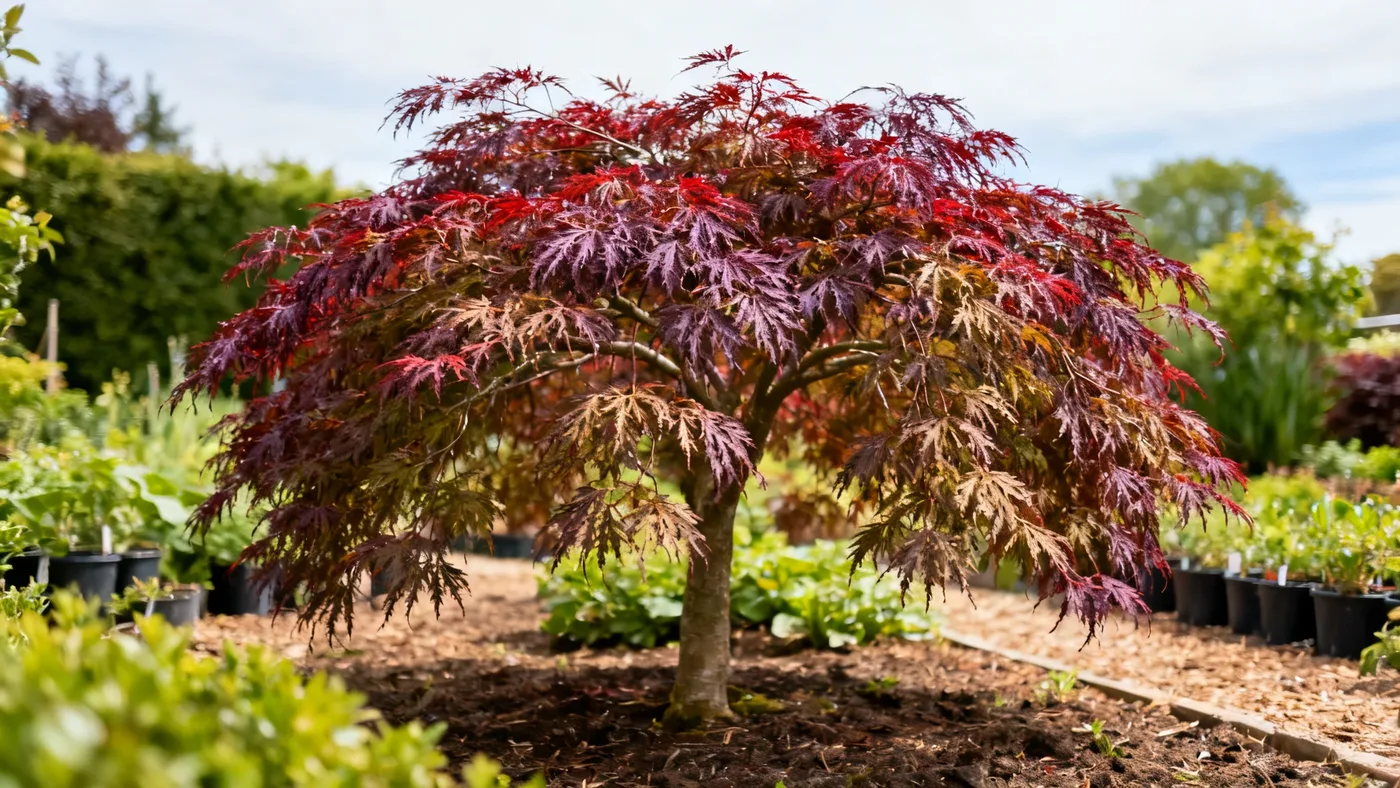
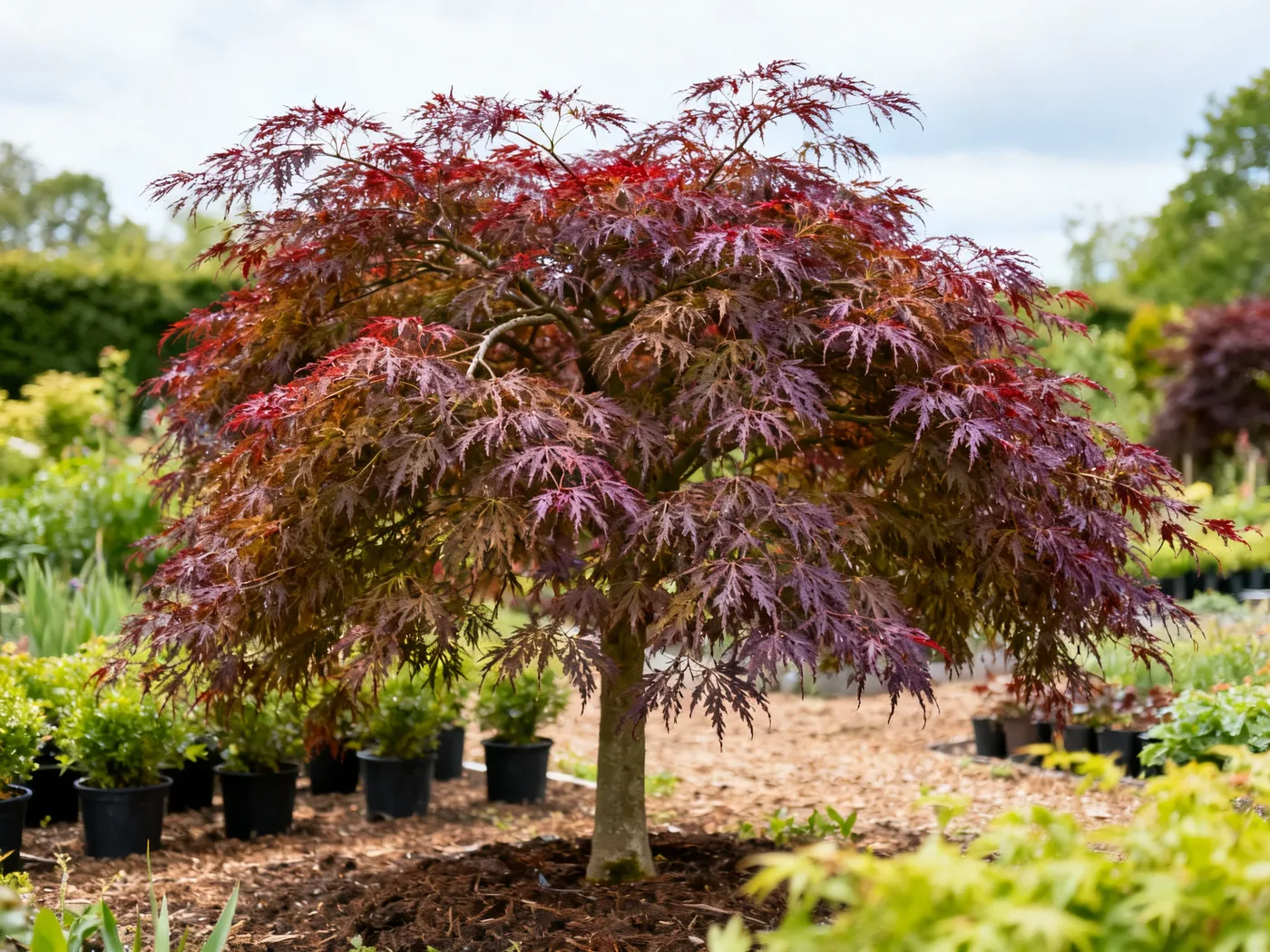
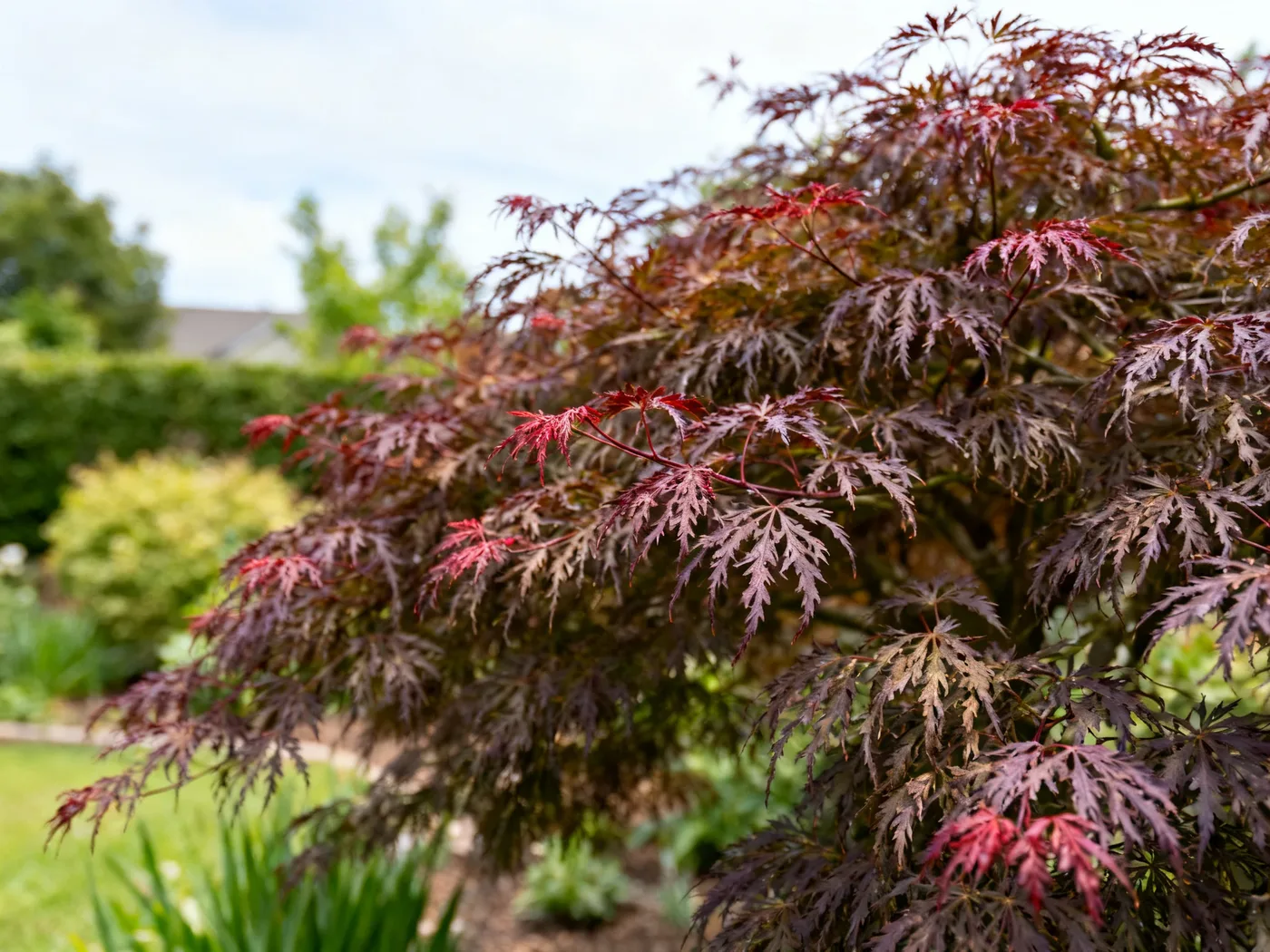
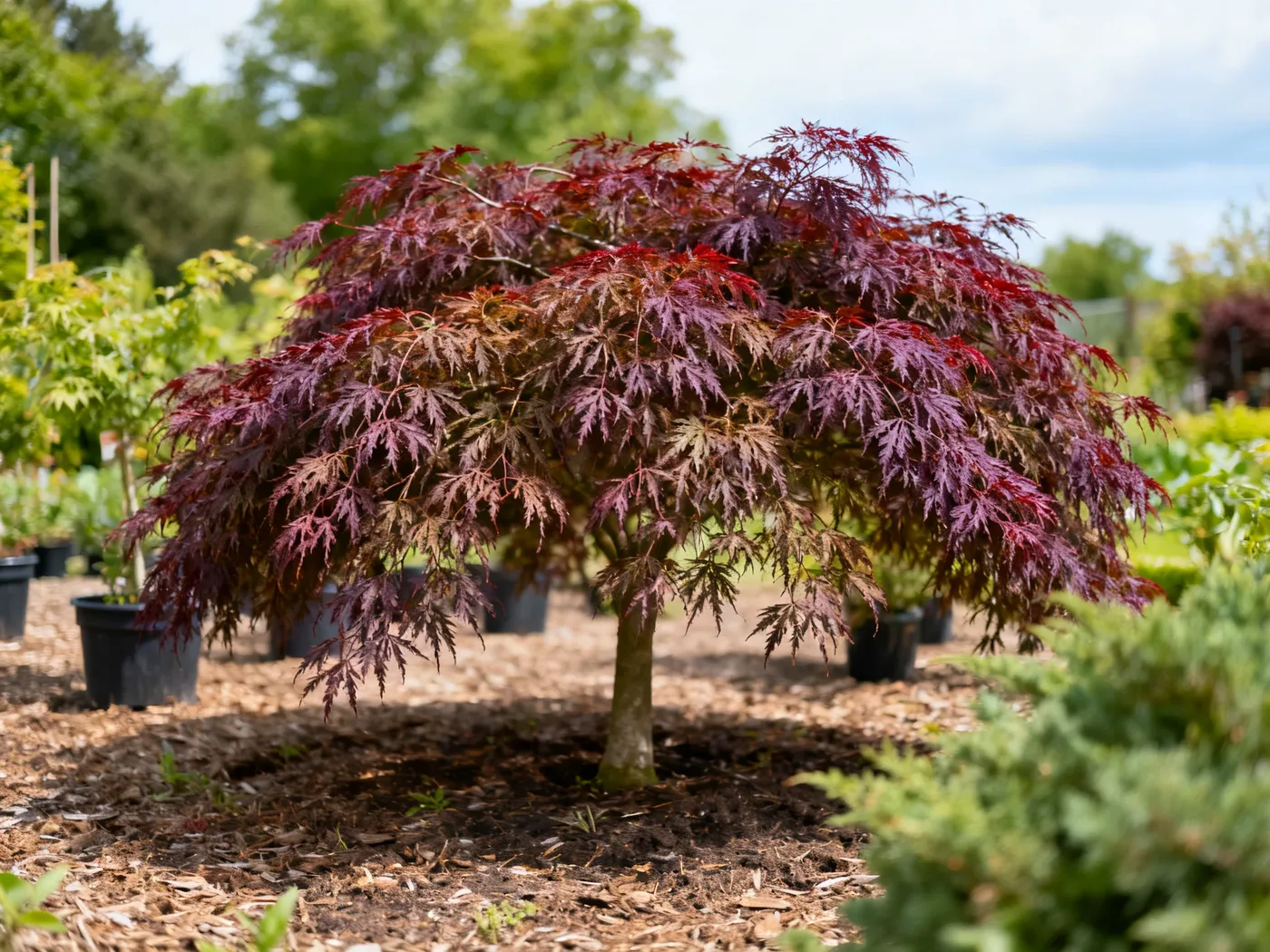
Crimson Queen Japanese Maple (Acer palmatum var. dissectum 'Crimson Queen') is a deciduous shrub or small tree prized for its finely dissected, lacy foliage and graceful weeping form. Unlike upright Japanese maple varieties, this cultivar grows as a cascading mound, making it ideal for specimen plantings, container gardens, and Japanese-style landscapes.
The hallmark of how to grow Crimson Queen Japanese Maple successfully is understanding its growth pattern. This is a slow-growing plant, adding roughly 6-12 inches per year. Over 15-20 years, a well-sited plant will reach 8-10 feet in height and 10-12 feet in width. The mature spread typically exceeds the height due to the weeping, horizontal branching habit. This spreading form makes Crimson Queen Japanese Maple care different from upright maples, as you must allocate adequate space for lateral growth.
The foliage emerges in spring with a deep red-purple color. In hot summers, the leaves may bronze-green slightly, an adaptation to intense sun and heat stress. Come autumn, this laceleaf Japanese maple care showcase reaches its peak, displaying brilliant crimson to scarlet red fall color. After leaves drop in winter, the graceful cascading branch structure becomes a focal point in the landscape.
Hardiness Zones and Climate Suitability
Crimson Queen Japanese Maple is rated hardy in USDA zones 5-8. Some nursery growers extend this range to zone 9 when the plant receives afternoon shade in hot-summer climates. Understanding your local zone is the first step in Crimson Queen maple care guide success.
Zone 5 Considerations
In the colder zones (zone 5), winter dieback on younger, newly planted specimens is possible, though mature, established plants are typically hardy. Protect young plants with mulch around the base in the first few winters. Plant in spring to allow maximum establishment time before winter.
Zones 6-8: Ideal Range
Zones 6, 7, and 8 represent the sweet spot for Crimson Queen Japanese Maple. The plant thrives with minimal cold injury and avoids excessive heat stress. These regions provide balanced growing conditions.
Zone 9 and Hotter Climates
If you live in zone 9 or experience hot summers, provide afternoon shade to prevent leaf scorch. This shade requirement is critical to Crimson Queen Japanese maple care in southern regions. Morning sun followed by afternoon shade helps the plant maintain foliage quality without the stress of all-day heat exposure.
Sunlight Requirements
Crimson Queen Japanese Maple performs best in full sun to partial shade. The exact recommendation depends on your climate:
In Cooler Zones (5-7)
Plant in full sun to partial shade. Full sun encourages vibrant foliage color and dense branching. Partial shade is equally acceptable and does not compromise the plant's form or growth rate.
In Warmer Zones (8-9)
Afternoon shade is beneficial and often necessary to prevent leaf scorch. Afternoon shade means shade from roughly 1 p.m. to sunset. Morning sun (6 a.m. to noon) provides light while afternoon protection prevents the intensest daily heat from damaging the delicate, dissected leaves.
Wind Exposure
Position Crimson Queen away from strong winds. The finely dissected foliage is delicate and can desiccate in dry, windy exposures. A location with morning sun, afternoon shade, and shelter from afternoon winds creates ideal growing conditions.
Soil Preparation and Planting
Soil Type and pH
Crimson Queen Japanese Maple thrives in rich, well-drained loam high in organic matter. The ideal soil pH is slightly acidic to neutral, ranging from 5.5 to 6.5. If your soil is too alkaline (above 7.0), consider amending with sulfur or peat moss to lower the pH before planting.
Test your soil with a simple home kit or contact your local extension service for a detailed soil analysis. This step prevents costly corrections after planting.
Planting Season
Plant Crimson Queen Japanese Maple in early spring or early fall. Avoid peak summer heat, which stresses newly transplanted specimens. Spring planting (as soon as soil is workable) or fall planting (6-8 weeks before the first hard frost) both allow the root system to establish before the plant faces environmental stress.
Planting Steps
- Dig a hole as deep as the root ball and 2-3 times wider
- Place the plant so the top of the root ball is level with the soil surface. Never plant deeper than the nursery pot indicated
- Backfill with amended soil (native soil mixed 50/50 with compost)
- Water thoroughly to settle the soil and eliminate air pockets
- Apply 2-3 inches of organic mulch around the base, keeping mulch 3-4 inches away from the trunk
Spacing
Space Crimson Queen Japanese Maple 8-12 feet from other trees and structures to accommodate its mature spread of 10-12 feet. Crowding the plant results in poor air circulation and reduces the cascading form that makes this cultivar so attractive.
Watering and Moisture Management
Regular, consistent moisture is essential to successful Crimson Queen Japanese maple care. This plant is not drought tolerant once dry spells extend beyond 1-2 weeks.
Establishment Phase (First Year)
Water newly planted Crimson Queen deeply 2-3 times per week during the first growing season, depending on rainfall and weather. The soil should feel moist 4-6 inches down, but never soggy. Check moisture by inserting your finger into the mulch layer; if the soil is dry, water thoroughly.
Established Plants
Once established (after the first full growing season), reduce watering frequency. Water during dry spells when the top 2-3 inches of soil become dry. In regions with reliable rainfall, supplemental watering may be needed only during periods of drought.
Avoiding Soggy Soil
Poor drainage and constantly wet soil invite root rot and diseases. Ensure your planting site drains well. If you have heavy clay soil, amend heavily with compost and perlite before planting, or consider planting in a raised mound. Container-grown Crimson Queen requires well-draining potting soil and drainage holes in the pot.
Container and Patio Planting
Crimson Queen is well suited to large containers (minimum 3-5 gallons). Container plants dry out faster than in-ground specimens and need more frequent watering. In colder zones, container plants may need extra winter protection for the root zone, as roots are more exposed to freezing temperatures.
Seasonal Care Calendar
Spring (March-May)
As growth begins, apply a light application of balanced, slow-release fertilizer in early spring. Follow the package rate; avoid high-nitrogen feeds, which push weak, excessive growth at the expense of foliage color. Water as soil dries out, especially before the tree leafs out fully. Watch for leaf emergence, which typically occurs in late April to early May. Tiny reddish-purple flowers appear during spring bloom (April-May) but are not ornamentally significant.
Summer (June-August)
Monitor for heat stress and leaf scorch, especially in zones 8-9. Provide afternoon shade if needed. Maintain consistent soil moisture. Avoid heavy pruning in summer, which can stress the plant. Watch for common pests such as aphids, Japanese beetles, and mites, which can appear in warm weather.
Fall (September-November)
This is Crimson Queen's show season. Brilliant crimson to scarlet foliage peaks in October (timing varies by region and weather). Reduce watering as growth slows and temperatures drop. This is the ideal time to perform any needed pruning. Prune in late fall as the tree goes dormant, removing dead, crossing, or downward-growing interior branches.
Winter (December-February)
The bare branch structure is ornamentally valuable in winter landscapes. Avoid pruning during hard freezes. Mulch newly planted trees to protect shallow roots. In zone 5 and colder parts of zone 6, check newly planted trees for frost heave (soil pushing the plant up out of the ground) after freeze-thaw cycles; gently press the tree back down if needed.
Pruning and Branch Training
A key tenet of Crimson Queen Japanese maple care is that minimal pruning is required. This plant is naturally graceful when left alone. Over-pruning destroys the weeping form and weakens the tree.
When to Prune
Prune in late fall through midwinter dormancy (November through February). Avoid heavy pruning in summer or spring, which stresses the plant and delays establishment.
What to Remove
- Dead or diseased branches
- Crossing branches that rub together
- Interior branches growing downward into the interior of the canopy
- Branches that interfere with pathways or structures
How to Prune
Use sharp pruning shears and cut just outside the branch collar (the swollen area where the branch meets the trunk or limb). Make clean cuts; do not leave stubs or tear the bark. For large branches, use the three-cut method: undercut 6-12 inches from the trunk, then cut from above to meet the undercut, then remove the stub just outside the collar.
Avoiding Common Mistakes
Do not shear the plant into a geometric shape. Do not remove more than 20-25 percent of the canopy in one year. Do not apply wound dressing or pruning sealer; trees compartmentalize wounds naturally.
Common Issues and Solutions
| Problem | Cause | Solution |
|---|---|---|
| Leaf scorch (browning/scorching of leaf margins) | Too much sun, wind, or drought in hot climates | Provide afternoon shade in zones 8-9; ensure consistent soil moisture; mulch to retain moisture |
| Verticillium wilt (yellowing, wilting, branch dieback) | Soil-borne fungus; often fatal | Improve drainage; avoid wounding; no cure once established; remove and destroy infected tree |
| Aphids or scale insects | Common pests on stressed trees | Spray with insecticidal soap or horticultural oil in spring and early summer |
| Japanese beetles | Pest in warmer zones; skeletonize foliage | Hand-pick early morning; treat with neem oil or spinosad if severe |
| Root rot or poor growth | Soggy soil or poor drainage | Amend soil with compost and perlite; ensure mulch does not touch trunk; improve drainage |
| Winter dieback on young plants (zone 5) | Cold stress on newly planted specimens | Mulch well; plant in spring; provide shelter from strong winter winds |
Disease Prevention
The best defense against diseases like verticillium wilt and anthracnose is a healthy, well-sited plant. Proper spacing ensures good air circulation. Avoid overhead watering, which promotes fungal diseases. Water at the soil level in early morning. Remove fallen leaves and branches to reduce disease pressure.
Deer and Wildlife
Crimson Queen Japanese Maple is rated moderately resistant to deer browsing, though resistance varies by region and local deer pressure. If deer are a significant concern in your area, install tree guards or fencing, especially on young plants.
Quick Reference Guide
| Care Aspect | Details |
|---|---|
| Hardiness | USDA zones 5-8; zone 9 with afternoon shade |
| Mature Size | 8-10 ft tall x 10-12 ft wide (15-20 years) |
| Growth Rate | Slow; 6-12 inches per year |
| Sunlight | Full sun to partial shade; afternoon shade in zones 8-9 |
| Soil pH | 5.5-6.5 (slightly acidic to neutral) |
| Soil Type | Rich, well-drained loam with high organic matter |
| Watering | Regular, consistent moisture; not drought tolerant when dry spells extend |
| Fertilizing | Light, balanced slow-release fertilizer in early spring; avoid high nitrogen |
| Planting Season | Early spring or early fall (avoid peak summer) |
| Spacing | 8-12 feet from other plants and structures |
| Pruning | Minimal; late fall to midwinter; remove only dead or crossing branches |
| Fall Color | Brilliant crimson to scarlet red |
| Salt Tolerance | Low; keep away from road salt |
| Deer Resistance | Moderately resistant (varies by region) |
| Lifespan | Long-lived; often 50-100+ years |