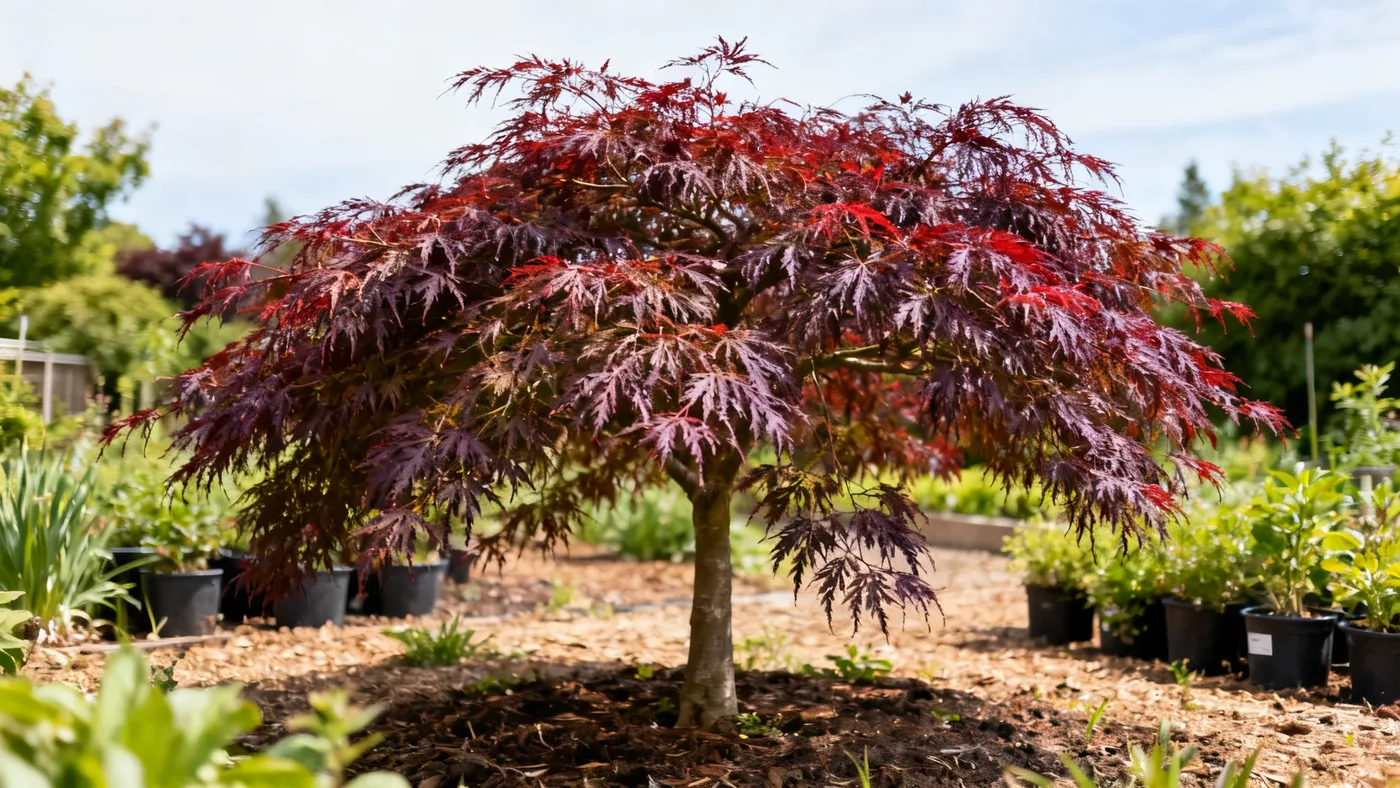
Watering Crimson Queen Japanese Maple: A Season-by-Season Guide
Proper watering is the foundation of growing a healthy Crimson Queen Japanese Maple. This laceleaf cultivar demands consistent moisture throughout the growing season, but too much water is just as harmful as too little. The challenge lies in matching your watering routine to the changing needs of your tree as temperatures shift and the season progresses.
This guide will walk you through the exact timing, volume, and techniques for keeping your Crimson Queen thriving, with specific attention to the seasonal shifts that shape when and how much you water.
What You'll Need
You do not need elaborate tools to water well. A few reliable items will serve you through every season:
- A soaker hose or drip line (preferred over overhead watering, which wets foliage)
- A timer (optional but useful for consistency)
- A moisture meter or soil probe to check soil moisture at depth
- A watering can or hose with a soft spray nozzle for hand-watering small trees or container plants
- Mulch (2 to 3 inches of wood chips or compost, kept 3 to 4 inches away from the trunk)
Understanding Your Crimson Queen's Water Needs
Crimson Queen Japanese Maple has low to moderate drought tolerance once established, but the key word is "once established." A young tree, especially in its first year, is not yet established. Young trees have shallow root systems and cannot access water deep in the soil, so they dry out faster than mature specimens.
The plant also demands rich, well-drained loam high in organic matter, with a soil pH of about 5.5 to 6.5. Well-drained does not mean dry; it means water drains freely without pooling, and the soil dries somewhat between waterings. Avoid soggy conditions, which invite root rot. The goal is moist, not wet.
In hot climates and especially in zones 8 and warmer with full sun exposure, afternoon shade benefits your Crimson Queen by reducing leaf scorch and lowering water demand. Full sun trees in these hotter zones typically need more frequent watering than shaded trees.
Spring Watering (March to May)
Spring is when your Crimson Queen emerges from dormancy and puts out new foliage. At this stage, the tree's root system is waking up and beginning to draw water from the soil again. Water needs increase steadily as temperatures warm and new growth emerges.
Step 1: Check soil moisture after the last frost. In early spring (March in zones 7 to 8, April in zones 5 to 6), push a soil probe or your finger 2 to 3 inches into the soil near the tree's root zone. The soil should feel cool and slightly moist. If it is bone dry, water deeply.
Step 2: Water deeply once per week during early spring growth. Early spring (dormant or just leafing out) calls for one thorough watering per week. Apply water slowly, allowing it to soak into the root zone rather than running off. Water until the soil near the base feels moist 3 to 4 inches deep.
Step 3: Increase watering frequency as temperatures rise. By late April and May, as the tree leafs out fully and temperatures climb into the 60s and 70s, move to twice-weekly deep watering if no significant rain occurs. Light rain (less than 0.5 inches) counts as partial credit; skip that week's watering if rain has moistened the top few inches of soil.
Step 4: Apply or refresh mulch if you have not already. Spread 2 to 3 inches of wood chips or compost around the base, keeping the mulch 3 to 4 inches away from the trunk. Mulch moderates soil temperature and conserves moisture, reducing watering frequency in the hotter months ahead.
Summer Watering (June to August)
Summer is when most gardeners either over-water or under-water. Heat stress and the risk of leaf scorch peak in July and August, especially in open sun and hot climates. This is your most critical watering season and where attention pays dividends.
Step 1: Water deeply twice per week during peak heat. From late June through August, a typical Crimson Queen needs two deep soakings per week in zones 7 to 8. In zones 5 to 6 with cooler summers, one deep watering per week may suffice, but always check the soil first. Hot spells can change needs overnight.
Step 2: Water early in the morning. The best time to water is between 6 and 8 a.m., before heat peaks. Early morning watering gives the soil time to absorb moisture before the sun becomes intense. Avoid watering in the evening, when slow evaporation can leave foliage wet through the cool night and invite fungal disease.
Step 3: Soak the root zone, not the foliage. Direct water to the soil at the base of the tree, never onto the leaves. Wet foliage in heat can amplify sunburn damage. A soaker hose or drip line keeps water at soil level, where it is needed and where beneficial soil microbes thrive.
Step 4: Check soil moisture twice per week, not just the calendar. Stick your finger into the soil 3 inches deep. If it feels dry, water immediately. If it feels moist, wait another day or two. Clay and sandy soils behave very differently. Sandy soil dries faster and may need more frequent watering; clay holds water longer and needs less.
Step 5: Do not let the soil dry completely. Crispy, hard-packed soil is a sign the tree is under severe drought stress. Leaves will redden excessively, may curl, and sometimes drop. Recovery is slow. Water deeply as soon as you notice drought stress, but prevention is far simpler than rescue.
Fall Watering (September to October)
Fall is a transition month. Temperatures cool and rain typically increases, but the tree is still actively growing until frost triggers dormancy. Water needs decline but do not vanish.
Step 1: Shift to weekly watering in early fall. In September, as temperatures drop below 75 degrees (F), reduce from twice-weekly to once-weekly deep watering. Monitor rainfall; if you receive 1 inch or more per week from rain, skip that week's watering.
Step 2: Taper watering as dormancy approaches. By late October and early November, as leaves turn and drop, water only if the soil is dry 2 inches deep. The tree no longer needs consistent moisture as it prepares for winter rest.
Winter Watering (November to February)
Winter watering is minimal. Your Crimson Queen is dormant and consumes almost no water. However, completely dry soil can damage fine roots during cold snaps, so do not leave the tree bone dry.
Step 1: Water once per month during dormancy, if no snow falls. In winter, a single deep watering per month (late in the month) is usually sufficient to keep roots from drying out. If winter snow or freezing rain falls regularly in your area, skip winter watering altogether; the melting snow provides adequate moisture.
Step 2: Container trees need extra winter attention. If your Crimson Queen is in a pot and you live in zones 5 to 6, the root ball can freeze solid in winter. In autumn, move the container to a sheltered spot, such as against a wall, under an eave, or in an unheated garage. Check the soil moisture once per month; if it is dry, water lightly.
Signs of Overwatering
Too much water is the number one killer of Japanese maples. When soil stays soggy, roots suffocate and rot sets in. Watch for these warning signs:
- Leaves turn yellow or brown and feel soft or mushy to the touch
- Stems appear black, mushy, or collapse at the base
- Soil smells sour or fermented, a sign of anaerobic decay
- Fungal growth (mold or mushrooms) appears on the soil surface or in the pot
- The tree drops leaves suddenly, even in mid-summer when growth should continue
If you suspect root rot, stop watering immediately and let the soil dry out somewhat. If the problem is severe, repotting in fresh, dry soil may be necessary for container plants. For in-ground trees, improve drainage by working compost into the top 6 inches of soil and ensuring no water pools around the base during rain.
Signs of Underwatering and Drought Stress
Drought stress presents differently. The tree cannot deliver water to leaves fast enough to keep up with evaporation, especially in heat. Leaves show these signs:
- Leaves curl, crisp at the edges, or turn excessively dark red or brown
- Foliage looks wilted or droopy, especially in afternoon sun
- Veins stay green while tissue between them fades or browns (a sign of heat and water stress)
- Leaves drop mid-summer, before fall color arrives naturally
- The tree fails to put on new growth or growth is stunted and weak
Drought-stressed trees recover slowly. If you catch the problem early, deep watering over several days can reverse mild stress. However, severe leaf damage does not regrow; the affected leaves stay on the tree until natural drop, and new growth in the next season determines full recovery.
Common Watering Mistakes to Avoid
Mistake 1: Watering on a fixed schedule instead of checking soil. Every yard is different. Clay soil holds water far longer than sandy soil. Shade keeps soil moist longer than full sun. Rather than water every Monday and Thursday, feel the soil and water when it actually needs it. Soil conditions change week to week.
Mistake 2: Watering lightly every day. Daily shallow watering encourages shallow roots and washes nutrients away. Instead, water deeply and less often. Deep watering (soaking the root zone several inches down) builds a strong root system that can access moisture reserves deeper in the soil.
Mistake 3: Watering overhead or in the evening. Wet foliage in heat invites sunburn on the leaves. Watering at dusk leaves the canopy wet through the cool night, promoting mildew and fungal leaf spots. Morning watering gives foliage time to dry before heat peaks.
Mistake 4: Ignoring drainage at planting. If you planted your Crimson Queen in clay or compacted soil, water will pool and rot the roots. Before planting or after discovering soggy soil, amend the soil with compost and coarse sand to improve drainage and water movement.
Mistake 5: Forgetting to water newly planted trees. A young tree's root ball is small and dries faster than established soil. In the first year after planting, do not assume rain is enough. Check the soil 2 to 3 times per week and water if the top 2 inches feel dry.
Expected Results
A well-watered Crimson Queen shows vigorous spring and summer growth. Leaves unfurl a deep red-purple and maintain that color through summer, though they may bronze slightly in intense heat and full sun. The tree does not show leaf curl, wilting, or excessive browning at the edges.
Fall color emerges brilliant crimson to scarlet red around mid-October (timing varies by zone and year). By contrast, a tree that has been under water stress may regain color and vigor within days of deep watering, but leaf damage from past stress does not heal. Overwatered trees may recover if drainage is fixed, but root damage often proves permanent. Prevention is far simpler than rescue.
Quick Reference Watering Checklist
| Season | Frequency | Soil Check | Key Notes |
|---|---|---|---|
| Spring (Mar-May) | 1 per week, increase to 2x by late May | Should feel moist 3-4 inches deep | Apply mulch; increase frequency as temps rise |
| Summer (Jun-Aug) | 2 per week in zones 7-8; 1 per week in zones 5-6 | Check twice weekly; water if top 3 inches feel dry | Water early morning; avoid overhead watering |
| Fall (Sep-Oct) | 1 per week early fall; skip if steady rain falls | Should feel slightly moist | Taper as leaves drop and dormancy approaches |
| Winter (Nov-Feb) | 1 per month (if no snow or ice melt) | Should not be bone dry | Container plants need sheltered location in zones 5-6 |
Related Reading
For complete care instructions beyond watering, see Crimson Queen Japanese Maple Care: The Complete Growing Guide.