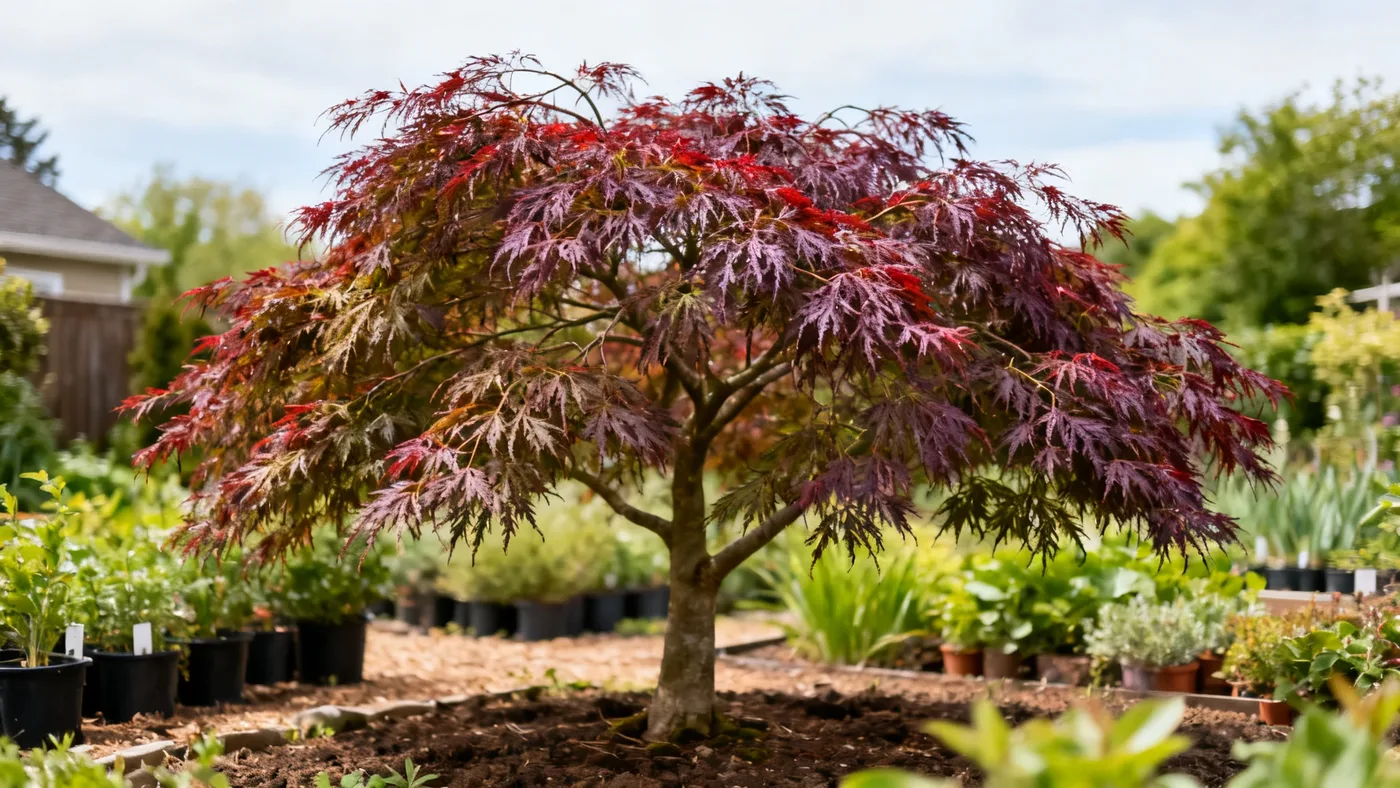
Crimson Queen Japanese Maple Hardiness Zones Explained
Choosing the right hardiness zone is one of the most important decisions when planting a Crimson Queen Japanese Maple. This laceleaf cultivar has specific temperature requirements that vary by region, and understanding these zones will help you pick a location where your tree thrives rather than merely survives. Whether you're in a cold northern garden or a hot southern landscape, the answers below cover what you need to know about growing Crimson Queen Japanese Maple in your climate.
Zone Ratings and Basics
What hardiness zones does Crimson Queen Japanese Maple grow in?
Crimson Queen Japanese Maple is rated for USDA hardiness zones 5-8, making it suitable for most home gardens across the northern and central United States. This rating means the tree can survive average annual minimum temperatures from roughly 10 to 20 degrees Fahrenheit (zone 5) down to 0 to 10 degrees Fahrenheit (zone 8). Zone ratings provide a useful baseline, but they do not account for sun exposure, moisture, or microclimate variations that can shift your effective zone by one or two degrees.
Can I grow Crimson Queen Japanese Maple in zone 9?
Some growers list Crimson Queen as hardy to zone 9 when planted with afternoon shade, which protects the tree from intense summer heat and heat stress. Zone 9 environments are hotter and drier than the tree naturally prefers, so success depends on afternoon shade, consistent soil moisture, and site selection away from heat-reflecting surfaces like pavement or south-facing walls. If you are in zone 9, check with your local nursery or extension service about whether specific microclimates in your area have proven successful for this cultivar.
Why is there conflicting zone information for this cultivar?
Different nurseries and sources list slightly different zone ranges because cold hardiness varies based on genetics, propagation stock, and growing conditions before planting. Some growers are more conservative (listing zones 5-7), while others note that well-established trees can push into zone 9 with afternoon shade. The core range remains zones 5-8; the zone 9 claim requires specific site conditions and is not guaranteed without proper shade and moisture management.
Is zone rating the only factor for growing Crimson Queen?
Zone rating is essential but not sufficient on its own. A Crimson Queen can have the right zone rating but still struggle if it sits in full afternoon sun in a hot climate, experiences drought, or is planted in poor soil drainage. Conversely, a well-sited tree in a cooler microclimate within zone 5 may outperform poorly positioned trees in warmer zones. Wind, moisture availability, and soil quality matter as much as temperature extremes.
What is the difference between cold hardiness rating and actual survival?
A zone rating tells you that a tree can survive the coldest average winter in that zone, but it does not account for late frosts, unseasonable warm spells followed by hard freezes, or ice storms that young trees may not withstand. Young Crimson Queen trees, especially those planted in fall, are more vulnerable to winter damage than established trees. Even hardy trees can suffer branch dieback or girdling if they are stressed by inconsistent moisture or poor planting depth.
Cold Hardiness and Winter
Will Crimson Queen Japanese Maple survive zone 5 winters?
Yes, Crimson Queen is rated hardy to zone 5 and can survive the average minimum temperature of 10 to 20 degrees Fahrenheit. However, zone 5 is the lower limit of hardiness, and winter dieback on younger plants is common in this zone, particularly during unusually harsh years or when trees are not properly established. Choosing a sheltered microclimate and establishing the tree fully before its first hard winter greatly improves survival odds.
Why do younger plants struggle more in zone 5?
Young trees have shallower root systems and thinner wood that is less able to withstand temperature extremes and drying winter winds. A Crimson Queen planted in fall will have minimal root establishment before cold weather, leaving it vulnerable to heaving (where freeze-thaw cycles push roots out of the ground). Younger trees also lack the structural maturity to handle heavy snow or ice load without branch breakage.
When should I plant Crimson Queen in zone 5?
Early spring planting is strongly preferred in zone 5 so the tree has the entire growing season to establish roots before winter arrives. Planting in early fall is possible but carries more risk in this zone, as young trees planted then will face winter stress in their first season. The longer the tree has to grow and harden off before cold weather, the better its survival rate.
How do I protect a young tree through its first winter?
Apply 2 to 3 inches of mulch around the base (keeping it a few inches away from the trunk) to insulate shallow roots and reduce frost heave. In zone 5, consider a burlap wrap around the first-year tree to shield it from drying winds and ice damage, though do not seal it so tightly that moisture builds up and rots the bark. Ensure consistent soil moisture going into winter, as dry soil exposes roots to more damage; water in fall before the ground freezes if autumn has been dry.
What winter damage should I expect on a Crimson Queen?
Winter dieback or damage to branch tips is the most common issue in zone 5, where outer growth dies back but the main trunk survives. In years with extreme temperature swings, cambium damage or canker formation can occur on exposed branches; prune these out in late fall through midwinter dormancy once you see them. Full tree mortality is rare if the tree is properly sited and established, but repeated stress over multiple harsh winters can weaken the tree over time.
Heat Tolerance and Summer Stress
Does Crimson Queen like hot summers?
Crimson Queen thrives in full sun to partial shade but benefits from afternoon shade in hot-summer climates to prevent leaf scorch. The cultivar naturally prefers cooler regions with moderate summer temperatures; in zones 8 and 9, particularly in the South or Southwest, afternoon shade is not optional but essential for plant health. Strong afternoon sun combined with drought stress can brown the lacy foliage even if temperatures are not extreme.
What is leaf scorch and why does it happen?
Leaf scorch is a browning or bleaching of leaf margins and tissue, usually appearing mid-to-late summer when the tree is under heat or moisture stress. It is not a disease but an environmental injury where the plant's water uptake cannot keep pace with evaporation through the fine, dissected leaves. Full sun exposure, inconsistent watering, or high temperatures above 85 degrees Fahrenheit over extended periods increases the risk, especially on younger or container-grown trees.
How does afternoon shade help in hot climates?
Afternoon shade, typically from a larger tree or structure, reduces the peak temperature and intense solar radiation that stress the foliage during the hottest hours (roughly 2 p.m. to 6 p.m.). It also reduces soil evaporation, helping consistent moisture reach roots without requiring daily hand watering. Morning sun still provides adequate light for growth and color development, while the midday and afternoon protection prevents the worst heat stress.
Can I grow Crimson Queen in zone 9 without special care?
Growing Crimson Queen in zone 9 without afternoon shade and diligent moisture management is risky and often unsuccessful. If you are in zone 9 and want to try this cultivar, plan for afternoon shade, regular drip irrigation or mulching to conserve soil moisture, and possibly extra winter protection in the first 2-3 years. Even with these measures, zone 9 is at the limit of where many growers recommend attempting this cultivar; consult your regional extension or local nursery for cultivars better suited to your specific zone 9 microclimate.
Regional Considerations
What about microclimates and local conditions?
Your specific yard microclimate can shift your effective zone by 1 to 2 degrees in either direction. A sheltered pocket on the east side of a building, protected from harsh northwest winter winds, may behave like zone 5.5 even if you live in zone 5. Conversely, a windy ridge or exposed south-facing slope may be harsher than the official zone suggests; map your yard's sun patterns, wind exposure, and drainage before planting.
How do wind and moisture affect hardiness?
Winter winds, especially drying winds from the north or west, can desiccate evergreen and newly planted trees and lower their effective cold tolerance by stressing them before a freeze even arrives. Inconsistent moisture, either drought or waterlogged soil, weakens a tree's ability to withstand cold; well-drained soil that retains some moisture is ideal. A tree in dry soil on a windy site may not survive the same winter temperature as one in a sheltered, consistently moist location.
What if my yard has extreme temperature swings?
Late-season frosts, warm spells followed by hard freezes, and rapid temperature drops can damage Crimson Queen even in rated zones. Avoid planting in low-lying frost pockets where cold air pools, and choose a location with gentle air drainage. If your yard experiences frequent temperature swings, consider slightly more protected placement, such as a site with some wind shelter but not a completely enclosed pocket that traps moisture.
Are there regional nursery recommendations?
Nursery-grown trees from local or regional growers in your zone are often better adapted to local conditions than mail-order stock from a distant climate. If you live in zone 5, buying from a zone 5 or 6 nursery gives you trees already acclimated to cold hardiness; if you are in zone 9, seek growers experienced with heat-stressed cultivars. Asking your local extension or nursery which Japanese maple cultivars succeed in your specific area is always wise before planting.
Planting and Protection Strategy
When is the best planting season by zone?
Early spring is ideal in zones 5 and 6, giving the tree a full growing season to establish before winter. In zones 7 and 8, both early spring and early fall are workable, though early fall is still preferred; avoid peak summer heat planting in any zone. The rule is simple: plant when the tree has at least 4-6 weeks of growing season ahead before the coldest part of winter or hottest part of summer arrives.
Why does planting depth matter for hardiness?
Planting too deep (with the soil line above the trunk flare) restricts root growth and encourages girdling roots and crown rot, weakening the tree and lowering its cold tolerance. The top of the root ball should sit level with the ground surface, never buried. A weak root system cannot support cold hardiness, no matter what the zone rating says.
How long until a Crimson Queen is fully cold hardy?
A Crimson Queen grows slowly, roughly 6-12 inches per year, and reaches near-mature landscape size in about 10-15 years. Most trees begin to show improved cold hardiness after the first 2-3 years of establishment, once roots are deep and the woody structure is thickened. However, full maturity (and maximum hardiness) can take a decade or more, so patience and consistent care in early years pay off.
How do I know if my Crimson Queen has cold damage?
Cold-damaged branches are visibly dead, brittle, or lack leaves and new growth in spring compared to the rest of the tree. Cambium (the layer under the bark) may appear brown or black instead of green; gently scrape the bark to check. Prune out visibly dead wood in late fall through midwinter dormancy, cutting back to healthy tissue just above a branch collar; do not remove more than one-third of the tree's canopy in a single year.
Quick Reference Guide
| Zone | Min. Winter Temp | Planting Notes | Special Care |
|---|---|---|---|
| Zone 5 | 10-20 F | Plant early spring only; avoid fall planting | Winter mulch and wind protection for young trees; expect occasional branch dieback |
| Zones 6-7 | 0-10 F / -10-0 F | Plant early spring or early fall; avoid peak summer heat | Mulch young trees; consistent moisture in growing season |
| Zone 8 | 10-20 F (winter min) | Plant early spring or early fall; focus on afternoon shade | Afternoon shade; consistent watering; mulch to cool soil |
| Zone 9 | 20-30 F | Plant early spring; requires strong afternoon shade year-round | Essential afternoon shade; drip irrigation; consult local extension; not reliably hardy |
Hardiness Checklist
- Know your USDA hardiness zone (check USDA zone map for your exact location)
- Map microclimates in your yard (sun, wind, drainage, frost pockets)
- Plant in early spring in zones 5-6; early spring or early fall in zones 7-8
- Choose a location with afternoon shade in zones 8-9
- Plant at the correct depth (root flare level with soil surface)
- Mulch young trees and water consistently until established (2-3 years)
- In zone 5, protect young trees from winter wind and frost heave
- Check for cold damage in early spring and prune dead wood in dormancy
- For zone 9, consult local nurseries and extension for cultivar suitability
For detailed growing guidance, see our complete Crimson Queen care guide and mature size and growth expectations.