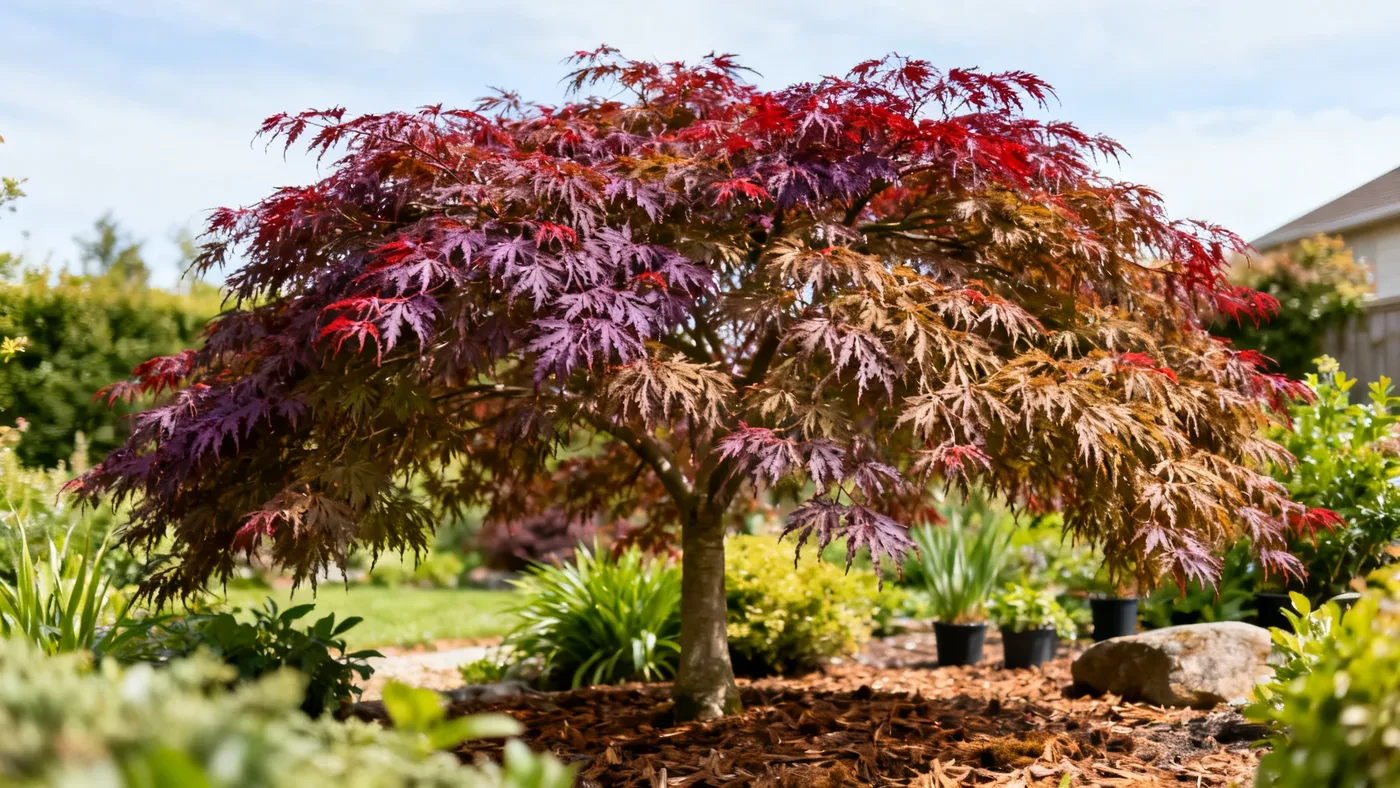
How Big Does a Crimson Queen Japanese Maple Get?
Choosing the right size plant for your garden starts with understanding how large it will actually grow. Crimson Queen Japanese Maple is a slow-growing, compact weeping tree that reaches a predictable mature size. Whether you're fitting it into a small yard or planning a specimen planting, this guide covers the sizing questions home gardeners ask most.
Size and Dimensions
How big does a Crimson Queen Japanese Maple get at full maturity?
A mature Crimson Queen typically reaches 8 to 10 feet tall and 10 to 12 feet wide after 15 to 20 years of growth. The width usually exceeds the height because of its naturally weeping, cascading branch habit. Some nurseries list mature specimens up to 12 feet in either direction depending on climate and growing conditions, though this takes several decades to achieve.
Is a Crimson Queen wider than it is tall?
Yes. This laceleaf maple is wider than tall at maturity, typically spreading 2 to 4 feet beyond its height. This spreading form is one of its defining characteristics and makes it an excellent specimen plant for spaces where you want a graceful, horizontal presence. Plan your spacing accordingly if you have limited room.
What is considered full maturity for this cultivar?
Full maturity occurs around 15 to 20 years after planting. At that point, the tree reaches its landscape size of 8 to 10 feet tall and 10 to 12 feet wide and settles into its growth pattern. The tree will continue living for 50 to 100 or more years with good siting, but its size stabilizes well before then.
How does container size affect the mature dimensions?
Trees grown in containers typically remain slightly smaller than those in the ground because root space is limited. A Crimson Queen in a large container (15 to 25 gallons) may reach 6 to 8 feet tall and proportionally wide rather than the full 8 to 10 feet. Root-bound conditions will further restrict growth, though the tree can live a full life in a container with proper care and winter protection in colder zones.
Can a Crimson Queen outgrow a small yard?
It depends on your yard size and tolerance for pruning. A mature spread of 10 to 12 feet needs that much clear space to look its best, but the tree's slow growth rate gives you years to assess fit. If space is truly constrained, light pruning of lower branches or removing competing interior growth helps manage size without harming the tree's graceful form.
Growth Rate and Timeline
How fast does Crimson Queen Japanese Maple grow?
This is a slow-growing tree, adding roughly 6 to 12 inches per year under good conditions. At this pace, it takes 10 to 15 years to approach near-mature landscape size. The slow growth is normal for this species and is part of what makes it such a reliable, low-maintenance ornamental.
How long does it take to reach full size?
Plan for 15 to 20 years to see your Crimson Queen at its full mature height and width of 8 to 10 feet tall and 10 to 12 feet wide. Most of the visual development happens in the first 10 to 15 years, after which growth slows further. If you plant a young nursery specimen, patience is part of the deal.
Why is Crimson Queen such a slow grower?
Slow growth is a genetic trait of Japanese maple cultivars, particularly the laceleaf dissectum types like Crimson Queen. This growth habit produces denser branching, finer foliage, and the graceful cascading form that makes these trees ornamentally valuable. The trade-off is that you wait longer for full landscape impact.
Will my Crimson Queen look spindly or small for many years?
A healthy young specimen planted in spring or early fall will grow steadily from year one, but it will indeed look modest for several years. Many gardeners buy young trees in 1 to 3 gallon containers and accept the wait, while others invest in larger nursery-grown plants (5 to 15 gallons) to shorten the wait. Both approaches work, and the choice depends on budget and patience.
Does branch structure develop predictably as the tree grows?
Yes. Crimson Queen develops its characteristic weeping branch structure naturally without intervention. The canopy gradually broadens and cascades become more pronounced each season. Pruning to remove dead or crossing interior branches is optional, but the tree rarely needs corrective shaping to look attractive.
Spacing and Placement
How far should I plant it from structures like fences or patios?
Space your Crimson Queen at least 8 to 12 feet away from solid structures, fences, and buildings to allow for its full mature spread of 10 to 12 feet. This spacing also ensures good air circulation and prevents the tree from crowding the structure as branches cascade downward. Closer spacing may force pruning to keep the tree in bounds.
How much distance do I need between this tree and other plants?
Space it 8 to 12 feet from other trees and large shrubs to avoid competing for light and nutrients. Smaller companions like hostas, ferns, and low heuchera can grow directly beneath or beside it, taking advantage of the filtered shade the weeping branches provide. Just ensure the root zones do not overlap with competing trees.
Is Crimson Queen good for a small yard?
It depends on how you define small. A mature spread of 10 to 12 feet requires a dedicated space roughly 15 feet by 15 feet for ideal presentation. Yards smaller than that may find it challenging, though the slow growth rate gives you flexibility. Container growing or light pruning can adapt the tree to tighter spaces if needed.
Can Crimson Queen be grown in a container long term?
Yes, it is well suited to large containers with good drainage. Aim for a container at least 15 to 25 gallons to give roots adequate space for several years of growth. Trees in containers may need extra winter protection for their roots in colder zone 5 sites, and regular watering is critical since container soil dries faster than ground soil.
Regional Differences and Climate
Does climate affect how large Crimson Queen gets?
Yes, climate can influence growth rate and ultimate size. Trees in ideal conditions (zones 5 to 8, with afternoon shade in hot climates) grow steadily and reach the full 8 to 10 feet height. In zone 9 or with excessive sun exposure, growth may slow, leaf scorch can weaken the tree, and size may remain somewhat smaller. Soil quality and water consistency also play major roles.
Why do different nurseries list different mature sizes?
Mature size varies by region and growing conditions, and nurseries base their descriptions on observations in their own climate zones. A tree in the Pacific Northwest may grow differently than one in the mid-Atlantic or zone 8. Some lists cite up to 12 feet tall or wide at full maturity, which is possible in optimal conditions, while others conservatively quote 8 to 10 feet.
Can I grow Crimson Queen in zone 5?
Yes. Crimson Queen is hardy in zone 5, though winter dieback on younger plants is possible during severe seasons in colder zone 5 locations. Planted in spring to establish root systems before winter, mature specimens are quite hardy. Once established, even cold-zone trees often reach 8 feet or more despite winter challenges.
What about zone 9, is afternoon shade really necessary?
In zone 9 and hotter climates, afternoon shade is highly beneficial to prevent leaf scorch and heat stress. Trees in full sun in zone 9 may grow more slowly and appear less vigorous. Where afternoon shade is available, Crimson Queen can thrive in zone 9, though growth may be slightly more modest than in ideal zones 5 to 8.
Does soil type affect ultimate height and spread?
Rich, well-drained loam high in organic matter supports the fastest and most vigorous growth. Poor, compacted, or waterlogged soil stunts growth and can predispose trees to disease. Soil pH around 5.5 to 6.5 (slightly acidic to neutral) is ideal. Better soil means better growth, though the tree's inherent slow-growing nature still sets the pace.
Practical Sizing Decisions
Should I buy a large, expensive specimen or a smaller, young plant?
Both are valid depending on your priorities and budget. A large specimen (5 to 15 gallons) gives immediate visual impact and requires less patience, while a young 1 to 3 gallon plant costs less and can adapt to your site more easily. Young plants often establish better long term because they acclimate to your soil and microclimate.
Does pruning affect final mature size?
Light pruning to remove dead or crossing branches inside the canopy does not significantly limit size. Aggressive or heavy pruning can slow growth and create an unnatural form. Since Crimson Queen is naturally graceful when left mostly alone, minimal pruning keeps the tree healthy and beautiful without constraining its growth potential.
What if my Crimson Queen isn't growing as expected?
Check soil moisture (these trees need consistent, not soggy, soil), sunlight (partial shade is ideal in hot climates), and drainage. Waterlogged soil and extreme heat or drought stress can stunt growth. If the tree appears healthy but is simply growing at the slow end of the 6 to 12 inch per year range, that is normal and patience is the answer.
Quick Reference: Crimson Queen Size at a Glance
| Measurement | Typical Range | Timeframe |
|---|---|---|
| Mature Height | 8 to 10 feet (up to 12 ft in ideal conditions) | 15 to 20 years |
| Mature Width | 10 to 12 feet (wider than tall) | 15 to 20 years |
| Annual Growth Rate | 6 to 12 inches per year | Ongoing |
| Near-Mature Size Reached | 6 to 8 feet tall, 8 to 10 feet wide | 10 to 15 years |
| Recommended Spacing | 8 to 12 feet from structures and other trees | At planting |
| Lifespan | 50 to 100+ years | With good siting |
For more details on planting, care, and management, see our complete growing guide for Crimson Queen Japanese Maple. Understanding size and growth rate at the outset helps you choose the right location and set realistic expectations for your tree's development.