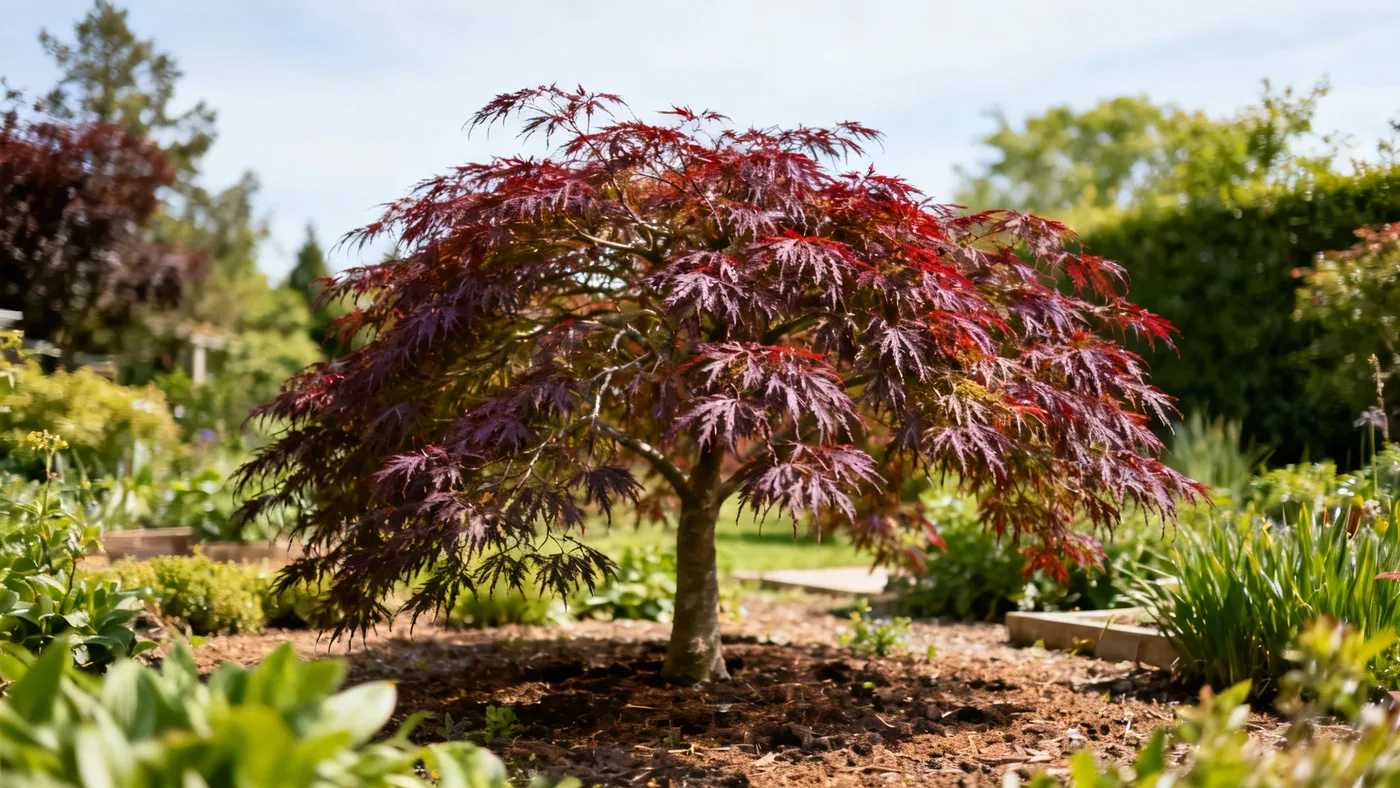
Do Crimson Queen Japanese Maples Need Fertilizer?
Crimson Queen Japanese Maples are slow growers by nature, putting on roughly 6 to 12 inches of new growth each year. This deliberate pace is part of their appeal, especially if you're working with a smaller yard. But slow growth raises a practical question: does your Crimson Queen actually need fertilizer, or will it thrive without it? The answer depends on your soil and where you live, but understanding the fundamentals of fertilizing Japanese maple plants will help you make the right choice for your landscape.
Does Crimson Queen Japanese Maple Need Fertilizer?
The short answer is: not always, but often it helps. Crimson Queen Japanese Maples grow best in rich, well-drained loam high in organic matter. If your soil already has plenty of organic material, your tree may produce healthy foliage and growth without supplemental feeding. However, most home gardens start with soil that is depleted or lacks the balanced nutrition a young Japanese maple needs to establish well and transition from nursery conditions to landscape life.
When you first plant your Crimson Queen, the tree is working hard to develop a strong root system. A light application of the best fertilizer for Japanese maple during the growing season can accelerate this establishment phase without pushing weak, tender new growth that's vulnerable to cold snaps in zones 5 and 6.
Understanding Your Maple's Nutrient Needs
Japanese maple fertilizer schedules are not one-size-fits-all. The key is understanding what your Crimson Queen actually needs.
Nitrogen promotes leaf growth and deep color, which sounds ideal for a tree prized for its crimson foliage. However, excessive nitrogen, especially from high-nitrogen fertilizers, pushes rapid, weak growth that the tree cannot harden off before winter. This is particularly risky in zone 5, where winter dieback on younger plants is already a concern. Instead, aim for balanced nutrition with a modest nitrogen component.
Phosphorus supports root development and overall plant vigor, making it valuable for newly planted or stressed trees. Potassium helps with cold hardiness and overall plant resilience. A balanced slow-release fertilizer gives your tree steady access to all three without overwhelming it.
Best Fertilizer Types for Crimson Queen Japanese Maple
Slow-release or controlled-release fertilizers are the industry standard for Japanese maples. These products break down gradually over months, matching the tree's natural nutrient uptake and avoiding the boom-and-bust cycles of fast-acting feeds.
Look for a balanced formula, such as a 10-10-10 or 12-6-6 NPK ratio. If you're starting with nutrient-poor soil, a formula slightly higher in phosphorus, like 5-10-5, can support root establishment without pushing excessive foliage. Avoid anything labeled high-nitrogen or marketed for evergreen trees, since those formulas are designed for different plant priorities.
Organic options like composted bark, aged manure worked into the planting hole, or a granular fish-based fertilizer are gentler and build soil structure over time. Inorganic slow-release pellets or granules offer precise dosing and predictable release rates if you prefer that approach.
Liquid fertilizers are fast-acting and can be useful if your tree shows obvious nutrient deficiency during the growing season, but they're not ideal for routine feeding because they do not provide sustained nutrition.
When to Fertilize Your Japanese Maple
Timing matters for fertilizing Crimson Queen Japanese maple. The goal is to support growth during the active growing season without pushing tender growth that will be killed back by frost.
Apply fertilizer in early spring, as new buds break and leaves begin to unfold. This is when the tree's metabolism shifts into growth mode and nutrient demand rises. In most of the plant's hardiness range (zones 5 through 8), early spring means late March through April, depending on your local frost date.
Do not fertilize after mid-summer. Feeding your maple in late summer or fall encourages new growth that will not have time to harden off before winter dormancy arrives. This creates the exact problem you're trying to avoid, especially if you live in zone 5.
If you use a slow-release granular product applied in spring, one application usually lasts the entire growing season. Some gardeners in warmer zones (7 and 8) make a second light application in early summer, but this is optional and risks the downsides mentioned above.
Step-by-Step Fertilizing Guide
Materials You'll Need
- Balanced slow-release fertilizer (10-10-10, 12-6-6, or similar)
- Measuring cup or scale (if using granular product)
- Garden gloves
- Watering can or hose
- Mulch or leaf litter (optional but helpful)
Application Steps
- Choose your timing. Wait until early spring after the last hard frost in your zone. New leaves should be emerging but not yet fully developed. In zones 5 and 6, this is typically late March to mid-April. In zones 7 and 8, move this window up by 2 to 4 weeks.
- Inspect the root zone. Clear away any accumulated leaves or debris from the base of your tree. You want direct access to the soil surface where the roots are actively feeding.
- Check soil moisture. Your Crimson Queen prefers regular, consistent moisture. If the soil is bone-dry, water deeply a day or two before fertilizing. If it's already moist, proceed directly to fertilizing.
- Measure out the fertilizer. Follow the package label for the amount based on your tree's size. For a young tree in a nursery pot or a small landscape specimen, you'll typically apply 1/4 to 1/2 cup of granular fertilizer. Mature trees (8 to 10 feet tall) may need up to 1 cup. Do not exceed the label rate, as more is not better.
- Distribute the fertilizer evenly. Scatter the granules or pellets around the base of the tree, starting about 6 inches away from the main trunk and extending out to the outer edge of the canopy (the drip line). Japanese maples have fine, shallow roots that spread wide, so full coverage matters.
- Water thoroughly. After applying fertilizer, water the area well to dissolve the granules and begin carrying nutrients into the soil. Use enough water to wet the top 4 to 6 inches of soil. Slow-release products activate and move into the root zone through soil moisture, so this step is critical.
- Apply mulch (optional). A 2- to 3-inch layer of mulch around the tree conserves soil moisture and moderates temperature swings, both of which support nutrient uptake and reduce stress. Keep mulch at least 6 inches away from the trunk to prevent rot.
- Observe and adjust. Over the next 2 to 4 weeks, monitor new growth. Healthy leaves should emerge with good color and consistent texture. If growth looks pale or stunted by midsummer, a single liquid application can provide a quick nutrient boost. If growth looks vigorous and glossy, your fertilizing approach is working.
Common Fertilizing Mistakes to Avoid
Fertilizing too late in the season. This is the most common error. Summer and fall feeding pushes growth that will be winter-killed, leaving your tree weaker the following spring. Restrict feeding to early spring, period.
Using high-nitrogen fertilizers. Products labeled for lawns or marketed as "all-purpose" often contain 25 to 30 percent nitrogen. This pushes fast, lush foliage at the expense of root development and winter hardiness. Your Crimson Queen does not need this.
Overapplying fertilizer. More fertilizer does not mean faster or healthier growth. Excess nutrients can burn roots, especially in loamy soil with limited buffering capacity. Always follow package label instructions, which account for soil type and application method.
Fertilizing in drought conditions. If your area has experienced little rain and the soil is dry, do not apply fertilizer. Water first, allow the soil to settle, and fertilize after the next rain or watering cycle. Granular fertilizers applied to dry soil sit inert and may never dissolve properly.
Forgetting to water after application. Slow-release fertilizers require soil moisture to activate. Without adequate water, the nutrients sit on the surface and wash away or remain locked up.
Signs Your Maple Needs Fertilizer
If your tree is already established and you have not been fertilizing, watch for these indicators that a nutrient boost could help.
Pale or yellowing new leaves in spring, especially if older foliage is dark, may signal nitrogen deficiency. Slow, stunted growth year after year, even with adequate water, often points to depleted soil. Leaves that lack the deep crimson color your cultivar is known for, or that bronze and fade too early in summer, can indicate light hunger or stress from nutrient imbalance.
It is worth noting that some pale or fading foliage in mid-to-late summer is normal and environmental, not nutritional. Japanese maples in full sun or in very hot, dry climates sometimes show leaf scorch or color fading as heat stress, not hunger. Check soil moisture and afternoon sun exposure before assuming the tree needs fertilizer.
Fertilizing Container-Grown Crimson Queens
If you're growing your Crimson Queen in a large container on a patio, fertilizing becomes more important. Container soil drains and dries faster than ground soil, so nutrients leach out with watering. Use a balanced slow-release fertilizer at half the rate you would for a landscape tree, or switch to dilute liquid feeding every 2 to 4 weeks during the growing season. This approach provides steady nutrition without overwhelming the confined root system.
Link to Complete Care
Fertilizing is just one piece of the puzzle. For a complete guide to keeping your Crimson Queen healthy and vibrant, see Crimson Queen Japanese Maple Care: The Complete Growing Guide.
Quick Reference: Fertilizing Checklist
| Timing | Early spring (late March to mid-April in zones 5-6) |
|---|---|
| Fertilizer Type | Balanced slow-release (10-10-10, 12-6-6 NPK) |
| Amount (Young Tree) | 1/4 to 1/2 cup granular |
| Amount (Mature Tree) | Up to 1 cup granular |
| Application Area | From 6 inches off trunk to drip line |
| Water After Application | Yes, thoroughly, to activate granules |
| Avoid | High-nitrogen, late-season, dry soil |
| Container Trees | Use half-strength or dilute liquid, every 2-4 weeks |
| Frequency | Once per spring; optional second feeding early summer in zones 7-8 |