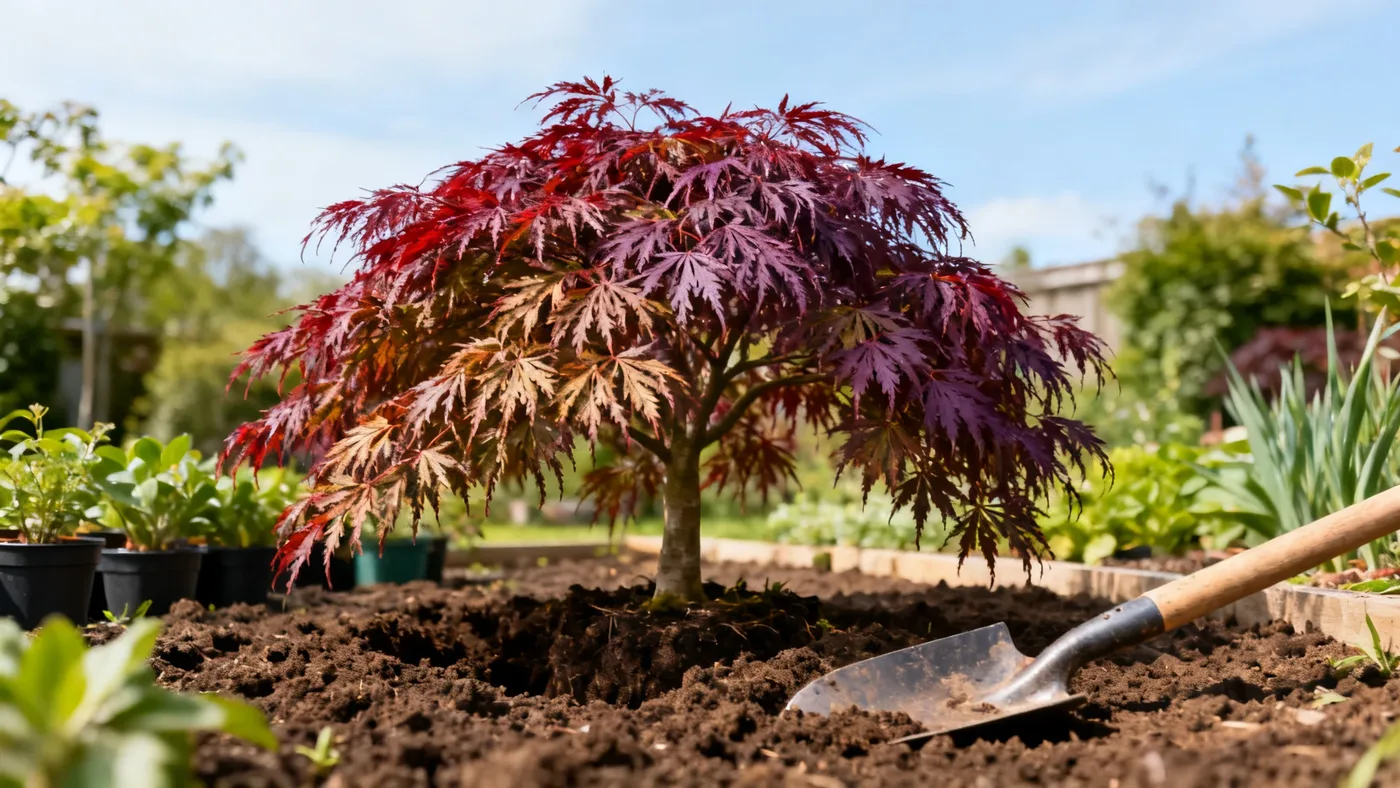
Landscape Ideas for Crimson Queen Japanese Maple and Companion Plants
Crimson Queen Japanese Maple is one of the most versatile trees for residential landscapes, thanks to its slow growth, manageable size, and striking weeping form. Over 15 to 20 years, it reaches 8 to 10 feet tall and spreads 10 to 12 feet wide, making it ideal for focal-point plantings that command attention without overwhelming a yard. The finely dissected, lacy foliage emerges deep red-purple in spring and deepens to brilliant crimson in fall, while the graceful cascading branches add winter interest long after the leaves drop. This guide shows you seven proven ways to incorporate Crimson Queen into your landscape, along with the companion plants that will amplify its beauty.
1. Specimen or Focal Point Planting
The most straightforward use for Crimson Queen is as a specimen tree, positioned where it becomes a visual anchor for an entire landscape. Because it grows slowly, reaching only 6 to 12 inches per year, you can plant it in a prime location and trust that it will remain in scale with your home and garden for decades. Position it in a spot visible from main windows or near an entryway where its cascading silhouette and seasonal color changes become part of your daily view. Specimen plantings work best when the tree has open sky above and clear sightlines on at least two sides, so the weeping form can be fully appreciated.
Lawn or mulched groundcover surrounding the base keeps maintenance simple and emphasizes the tree's graceful branching. Avoid planting it directly against a wall or dense shrub border, as this hides the backside of the canopy. Space it at least 8 to 12 feet from other trees or structures to allow its full mature spread to develop without crowding. If your yard is smaller, Crimson Queen still works as a focal point, but you'll need to prune conservatively to maintain its natural weeping habit.
Practical takeaway: Choose a location visible from your main living areas and allow at least 10 feet of clear space around the tree's eventual spread.
2. Japanese and Zen Garden Design
Crimson Queen is a cultural fit for Japanese and Zen garden aesthetics, where laceleaf Japanese maples are traditional elements. In these gardens, the tree becomes part of a carefully composed scene that includes stone lanterns, water features, and thoughtfully placed companion plantings. The cascading form symbolizes grace and age; the vibrant color reflects the seasonal cycles that matter in Japanese design philosophy.
Pair Crimson Queen with classic Japanese garden companions such as hostas (which thrive in the partial shade of the maple's canopy), ferns, and azaleas. Heuchera, with its burgundy or copper foliage, echoes the maple's color palette and adds textural variety. Add a small recirculating water feature or moss-covered stone at the base to complete the contemplative mood. In colder zones (5 to 8), this style of garden requires thoughtful placement of Crimson Queen where afternoon shade prevents leaf scorch from intense summer sun, while morning and midday light bring out the foliage color.
Practical takeaway: Create a Japanese garden vignette by positioning Crimson Queen as the focal point, surrounded by shade-tolerant companions and natural materials like stone and water.
3. Understory Planting with Shade-Loving Companions
As Crimson Queen matures, its canopy casts dappled shade across an ever-widening area. Rather than fight this, lean into it by underplanting with shade-loving species that appreciate both the shelter and the filtered light. Hostas are ideal partners, offering bold foliage contrast and thriving in the consistently moist soil that Crimson Queen prefers. Plant hostas 3 to 4 feet away from the trunk so they have room to expand as the maple's branches lower with age.
Ferns, rhododendrons, and hydrangeas all excel in the cool, protected microclimate beneath a mature Crimson Queen. These companions also share the tree's preference for rich, well-drained loam high in organic matter and slightly acidic soil (around 5.5 to 6.5 pH). Mulch the entire planting area with 2 to 3 inches of composted bark or leaf litter to maintain consistent moisture, suppress weeds, and feed the soil as organic matter breaks down over time.
Practical takeaway: Underplant with hostas, ferns, and hydrangeas, maintaining 3+ feet of space between companions and the maple trunk to prevent competition for water and nutrients.
4. Poolside and Water Feature Planting
Crimson Queen's graceful weeping branches and fine foliage make it a natural choice for poolside or pond-edge plantings, where the reflected light magnifies the visual impact of the cascading form. The tree's moderate drought tolerance (once established) means it can handle the microclimate near hardscapes that radiate heat, though consistent moisture is still essential during establishment and droughts.
Position the tree at least 8 feet from the pool's edge to keep fallen leaves out of the water while allowing the branches to reach toward and reflect in the water surface. Pair it with water-edge companions such as hostas and astilbe, which enjoy moist soil and the tree's afternoon shade. This planting style works especially well in zones 6 to 8, where afternoon shade protects the maple from leaf scorch while still providing plenty of morning light for vibrant color.
Practical takeaway: Plant Crimson Queen 8 to 12 feet from water features to maximize reflected beauty without debris problems or root interference with circulation systems.
5. Foundation Planting for Smaller Yards
For home gardeners with limited space, Crimson Queen offers a rare quality: a tree that reaches full horticultural beauty at a size that works in modest yards. At 8 to 10 feet tall and 10 to 12 feet wide after 15 to 20 years, it's large enough to make a landscape statement but small enough to complement a typical residential home without dominating the foundation or blocking windows. Plant it 8 to 12 feet from your house (depending on mature width) and pair it with low-growing companions such as heuchera or dwarf azaleas to create a layered, tiered effect.
Crimson Queen works especially well as a corner or accent planting where it creates privacy or visual interest without the aggressive growth habit of larger shade trees. Its low, spreading branches require minimal pruning, so you avoid the heavy maintenance that traditional foundation plantings often demand. In smaller spaces, the tree's slow growth rate means you can enjoy it in scale with your landscape from the moment of planting.
Practical takeaway: Use Crimson Queen in foundation plantings where its 8 to 10-foot mature height and slow growth suit smaller residential yards better than conventional landscape trees.
6. Seasonal Interest and Year-Round Appeal
Beyond its striking spring and fall foliage, Crimson Queen delivers landscape interest across all seasons. In spring, the finely dissected leaves emerge in deep red-purple, catching morning light. By summer, the foliage may bronze-green slightly under intense sun and heat, though afternoon shade preserves the richer color. In fall, the leaves transform to brilliant crimson and scarlet red, creating a focal point that rivals any plant in the yard.
Winter brings the most underrated appeal: once the leaves drop, the graceful, cascading branch structure becomes visible, creating an elegant silhouette against the dormant landscape or a winter sky. This characteristic branch form is why proper care and minimal pruning matter so much. The tree's natural weeping habit requires no heavy shaping, so the elegant structure is preserved year after year. Pair this winter interest with evergreen companions such as dwarf conifers or hellebores to ground the composition when deciduous plants have dropped their leaves.
Practical takeaway: Design your landscape to show off Crimson Queen's branch structure in winter by keeping the area beneath and around it open and uncluttered.
7. Container and Patio Planting
Crimson Queen is well suited to large containers with good drainage, making it an option for gardeners with only patio or deck space. Plant it in a container at least 20 to 25 gallons in volume, filled with a quality potting mix amended with extra perlite for drainage. In containers in zones 5 to 8, the tree may need extra winter protection for the roots, as soil in containers freezes deeper and colder than in-ground soil. Mulch the top of the container or move it against the house in late fall to insulate the root zone.
Container-grown Crimson Queen still reaches meaningful size over time, but it remains portable, allowing you to move it as your landscape preferences change or to bring it into a protected location during extreme winters in colder zones. Water container-grown trees regularly during the growing season, as they dry out faster than in-ground plantings. Pair the container with complementary potted companions such as hostas or Japanese sweet flag to create a cohesive patio vignette, or let the maple stand alone as the primary focal point.
Practical takeaway: Use 20 to 25-gallon containers with excellent drainage and provide winter root protection in zones 5 to 6; plan for frequent watering during the growing season.
Designing with Crimson Queen: Key Planting Guidelines
Regardless of the landscape style you choose, certain principles will help your Crimson Queen thrive. First, understand light needs for Crimson Queen Japanese Maple. The tree prefers full sun to partial shade, but benefits from afternoon shade in hot-summer climates to prevent leaf scorch. In zones 5 to 8 (and possibly zone 9 with afternoon shade), afternoon protection becomes especially important if you live in areas where summer heat regularly exceeds 90 degrees.
Second, prepare the soil. Crimson Queen demands rich, well-drained loam high in organic matter, with a soil pH between 5.5 and 6.5. Before planting, amend your native soil heavily with compost or aged bark to create a friable, moisture-retentive environment. Poor drainage is a common cause of failure, so if your yard has heavy clay, build a raised bed 6 to 8 inches high rather than planting at grade.
Third, plant in early spring or early fall, avoiding peak summer heat. Container-grown trees (the standard nursery format) can tolerate planting in summer if watered deeply and frequently, but dormant-season planting gives the tree the best chance to establish before stress from heat or drought arrives.
Quick Reference: Crimson Queen Companion Planting Checklist
| Aspect | Details |
|---|---|
| Mature size of Crimson Queen | 8-10 ft tall, 10-12 ft wide (15-20 years) |
| USDA Hardiness zones | 5-8 (zone 9 with afternoon shade) |
| Light requirements | Full sun to partial shade; afternoon shade in hot climates |
| Soil type | Rich, well-drained loam, high in organic matter |
| Soil pH | Slightly acidic to neutral (5.5-6.5) |
| Spacing from other trees/structures | 8-12 feet |
| Container size minimum | 20-25 gallons |
| Planting season | Early spring or early fall |
| Best companion plants | Hostas, ferns, azaleas, rhododendrons, hydrangeas, heuchera |
| Underplanting spacing | 3+ feet from maple trunk |
| Deer resistance | Moderately resistant (not deer-proof) |
| Winter interest | Cascading branch structure visible after leaf drop |