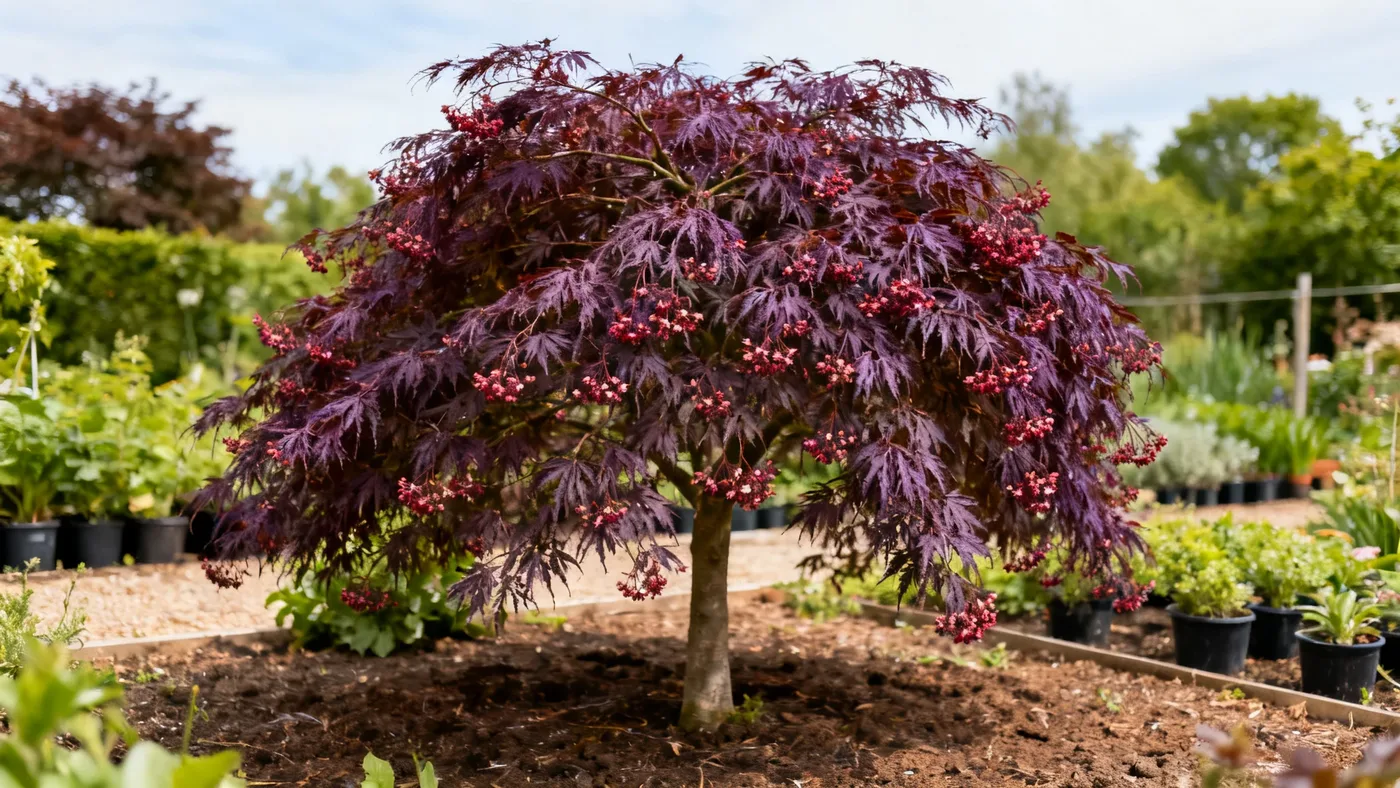
Crimson Queen Japanese Maple Fall Color: What to Expect and When
If you planted a Crimson Queen Japanese Maple, fall is the season your tree earns its name. Right now, as September turns toward October, the brilliant crimson to scarlet red foliage that makes this tree a focal point in any landscape is either already showing or about to arrive. The finely dissected, lacy leaves transition from their summer appearance into a jewel-tone show that justifies every bit of care you've put into growing this weeping laceleaf maple. This guide walks you through what to expect, when to expect it, and how to set your tree up for the most vibrant display.
The Crimson Queen's Fall Color Promise
Crimson Queen Japanese Maple is a cultivar bred specifically for color. Unlike many Japanese maples that may shift to bronze or dull orange, Crimson Queen reliably delivers brilliant crimson to scarlet red fall foliage. The foliage emerges red-purple in spring, may shift slightly to bronze-green during the heat of summer, and then intensifies back into those deep reds as temperatures cool. This return to red is the hallmark of the variety and what makes it such a popular choice for gardeners who want a strong visual anchor in the autumn landscape.
The lacy, deeply cut palmate leaves (palmate means hand-shaped, deeply divided) are what give this tree its laceleaf form. During fall, each fine-textured leaf becomes a small work of art. When backlit by morning or afternoon sun, the thin leaf tissue glows. Even a single tree can create a striking focal point in a shrub border or stand alone as a specimen plant where it becomes the centerpiece of the autumn garden.
When to Expect Crimson Queen Japanese Maple Fall Color
Timing depends on where you live. Crimson Queen grows in USDA zones 5 through 8, with some growers extending to zone 9 if the tree receives afternoon shade in those hotter regions. This geographic range spans considerable climate variation, and that affects when the color show begins.
In zone 5 and northern zone 6, expect the first visible color shift by late September. By mid-October, the peak color display is often complete. In zones 7 and 8, the timeline stretches later. Peak color may not arrive until late October or early November. In zone 9 (where the tree is less reliably cold-hardy), if it survives the winters, color change may come even later, sometimes into November.
Temperature is the primary trigger. Consistent nighttime temperatures in the 40s to 50s Fahrenheit spark the chemical changes that withdraw chlorophyll and reveal the red and yellow pigments underneath. A warm autumn, even in a colder zone, can delay color. A surprisingly early frost can accelerate it. Weather patterns matter more than the calendar.
Color Progression: What You'll Actually See
Crimson Queen does not flip from green to red overnight. Instead, the transition unfolds over 2 to 3 weeks, and understanding this progression helps you catch the peak color window.
In late summer and early fall, the tree's foliage may look bronze-green or olive-toned, especially if it has been growing in sun and warmth. This is normal. As nights cool and day length shortens, the green fades. The red pigments (anthocyanins) that were present all along become dominant. The color deepens gradually from a burgundy or wine tone into the brilliant crimson to scarlet red that defines the variety.
The peak color window, when the tree is at its most vibrant, typically lasts 1 to 2 weeks. Full color means the entire canopy is displaying red tones, not just scattered leaves. After peak, the foliage may retain good color for another week or two before the leaves begin to drop. By late fall or early winter, most leaves have fallen and the graceful weeping branch structure becomes visible against the sky.
What Affects Fall Color Intensity
Not every Crimson Queen looks identical in fall. Several factors influence whether your tree reaches that brilliant crimson peak or displays a more subdued tone.
Sunlight is the biggest variable. Crimson Queen grows in full sun to partial shade, but for the most intense red fall color, full sun (6+ hours) during the growing season is preferred. Trees in deep shade often develop less vibrant reds. However, in zones 7 and 8, afternoon shade during the hottest months can actually protect the foliage and result in better color because the leaves are less heat-stressed.
Soil moisture affects color intensity. Consistent, regular moisture throughout the growing season supports healthy leaf development and better pigment production. A tree that experiences drought stress in late summer, even a mild one, may display duller fall colors. This is not toxic to the tree, but it reduces the visual impact. Avoid letting the soil dry out completely, especially as temperatures cool and the tree prepares for dormancy.
Soil quality matters too. Crimson Queen prefers rich, well-drained loam high in organic matter, at a slightly acidic to neutral pH around 5.5 to 6.5. Trees growing in poor soil or very alkaline conditions may not achieve the same color intensity. If your tree is planted in amended, fertile soil with good organic content, you will typically see better color.
Age and maturity play a role. A young Crimson Queen freshly planted from a nursery may display good color but not the full intensity of a mature specimen. As the tree settles in and establishes, fall color typically deepens. Trees that are 5 to 10 years into the landscape will often show richer color than first-year trees.
Weather in the days leading up to fall can shift color timing and intensity. A warm, wet autumn delays color change and may mute the reds. A cool, dry spell can accelerate both color change and drop. An early hard freeze can turn foliage brown rather than red if it happens before the color transition is complete.
Caring for Crimson Queen During Fall
Fall care is mostly about letting the tree prepare naturally for dormancy, but a few actions maximize color and health.
Water consistently through fall until the ground freezes or the tree drops all its leaves. Even though growth is slowing, the roots are still active and drawing moisture. Irregular watering in fall can stress the tree and reduce fall color intensity. A deep watering once a week if there is no significant rain is usually enough.
Do not fertilize in fall. A light application of balanced, slow-release fertilizer in early spring is the right time. Fall feeding encourages weak, tender new growth that does not harden off before winter. It also directs energy into growth when the tree should be preparing for dormancy.
Avoid heavy pruning. If you need to remove dead wood or crossing branches, late fall to mid-winter dormancy is the right window. But save major pruning for late winter when you can see the full structure without leaves. The tree is naturally graceful and does not require heavy pruning.
Do not rake leaves immediately. Let the fallen leaves stay on the ground around the base of the tree for a few weeks. As they break down, they add organic matter back to the soil. If leaves pile directly against the trunk, gently clear a few inches, but otherwise, let them decompose in place.
Beyond Fall: Winter Interest
Once the brilliant crimson to scarlet red leaves drop, the Crimson Queen still earns its place in the landscape. The graceful cascading branch structure becomes visible. The weeping form, particularly striking on a specimen tree 8 to 10 feet tall and 10 to 12 feet wide, creates architectural interest through winter. The fine branches, often tinged with dark red bark, stand out against snow or a winter sky. This is the reason many gardeners position their Crimson Queen as a focal point where winter branch form can be appreciated even when foliage is gone.
To get the most from your tree year-round, plant it where you can see it from a window or primary seating area. The spring red-purple leaves, summer lacy texture, brilliant fall color, and winter branch structure create four distinct seasons of interest from one small tree.
Connecting Fall Color to Year-Round Care
Fall color is a window into overall tree health. A Crimson Queen that delivers brilliant crimson to scarlet red foliage has been healthy all year: watered consistently, planted in good soil, and positioned in appropriate light. If you are not seeing the intense color you expected, review the growing conditions outlined above. Often, a small adjustment in watering, adding organic matter to the soil, or providing afternoon shade in a hot climate can transform next fall's display.
For detailed guidance on all year-round care, see Crimson Queen Japanese Maple care: the complete growing guide. If your tree is newly planted or you are considering adding one to your landscape, how to plant a Crimson Queen Japanese Maple the right way covers site selection, planting depth, soil prep, and first-year establishment.
Quick Reference: Fall Color Timeline and Care
| Zone | Typical Color Start | Peak Color Window | Key Care Action |
|---|---|---|---|
| Zone 5 | Late September | Mid-October | Ensure consistent soil moisture through September and October |
| Zone 6 | Late September to early October | Mid to late October | Monitor for drought stress; provide afternoon shade if summer heat is extreme |
| Zone 7 | Early to mid-October | Late October to early November | Afternoon shade in hot regions improves color; keep soil consistently moist |
| Zone 8 | Mid to late October | Late October to November | Afternoon shade is beneficial; avoid drought stress in late summer and fall |
General Fall Care Checklist:
- Water deeply once weekly if rainfall is under 1 inch per week until ground freezes
- Do not fertilize; save spring feeding for early April
- Avoid heavy pruning; save structural pruning for late winter dormancy
- Allow fallen leaves to decompose on the ground; do not rake immediately
- Position the tree where winter branch structure is visible after leaf drop
- Check soil moisture even after most leaves have dropped; roots remain active