Does Crimson Queen Japanese Maple Stay Red All Summer?
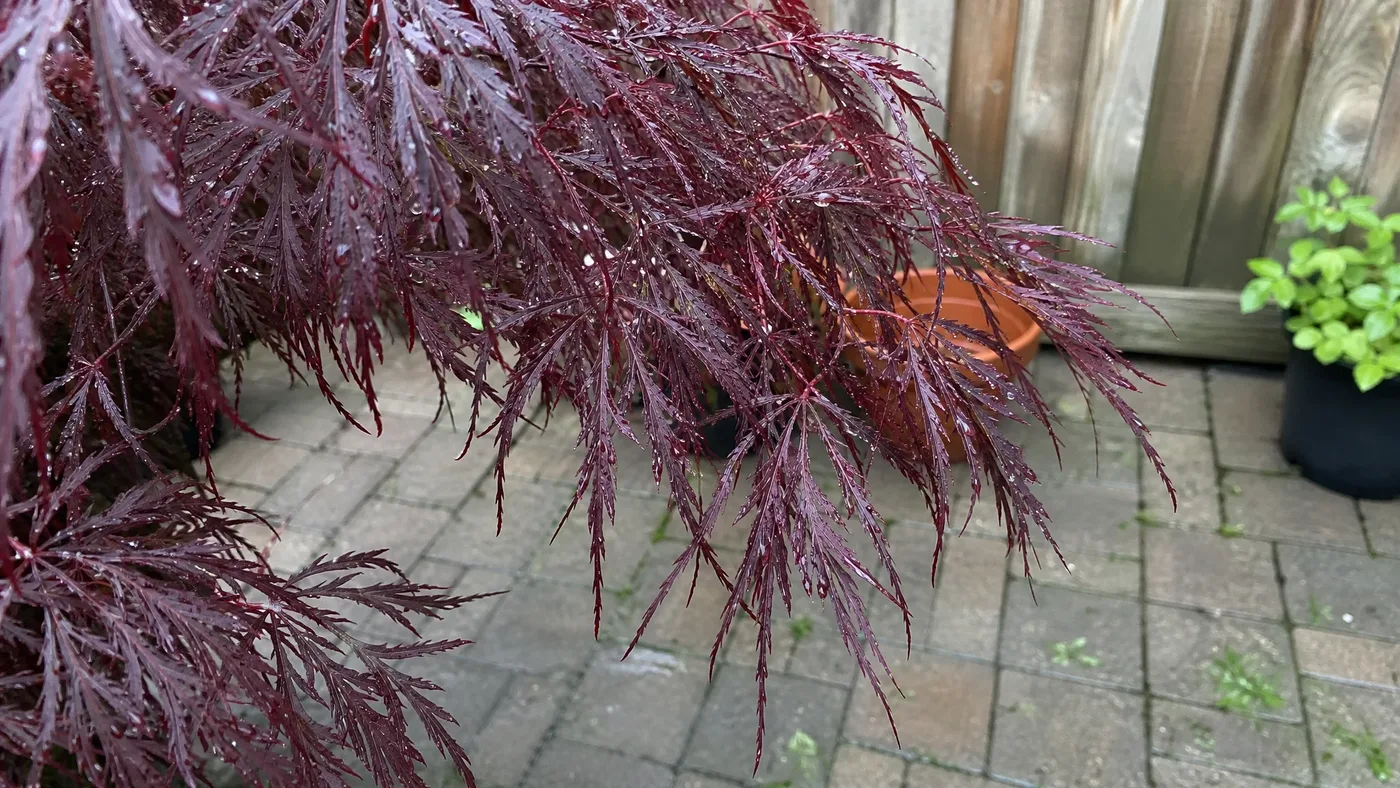
What actually makes a red leaf red, and why does the color you bought in May look more like brown tea by August? That is where most of the questions we get about Crimson Queen begin. Color is the reason people choose this weeping maple. A tree in the wrong spot spends much of the summer looking tired, while one in the right spot holds its burgundy until the leaves turn in fall.
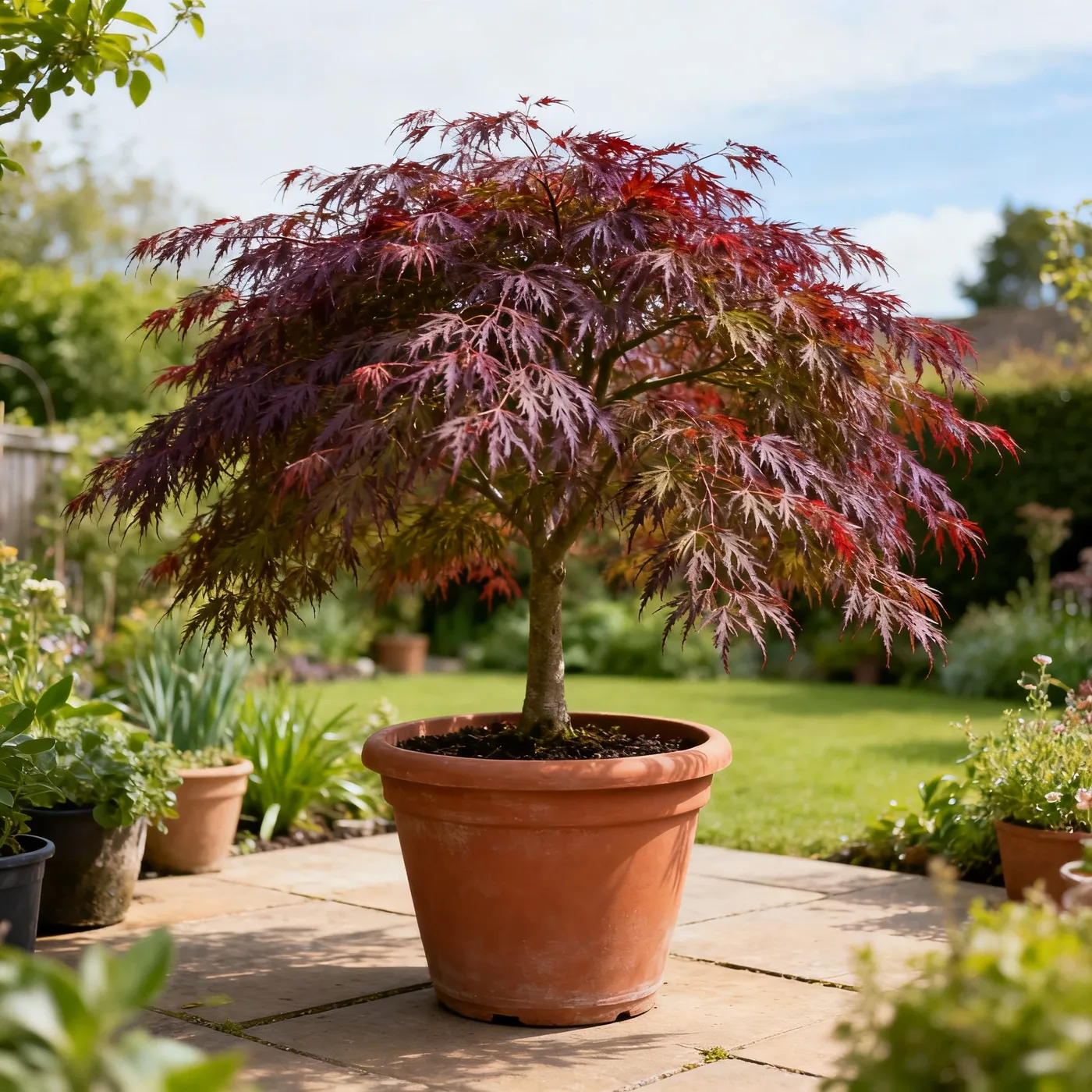
Red is a pigment the leaf makes, and green is a second pigment that competes with it. Read on for how the two share a leaf, why spring looks richest, what heat, sun, feeding and roots do to the balance, how fall fits in, and how to tell normal bronzing from a tree that needs help.
How Crimson Queen Japanese Maple Makes Its Red
Color in a leaf is chemistry, and a few facts about the pigment explain most of what you will see on your tree. We start with the red itself, then the unusual leaf that carries it.
A Red Pigment the Leaf Keeps Making
The red in Crimson Queen comes from anthocyanins, a family of red to purple pigments held in the cells of the leaf.
A typical green maple builds little of this pigment during summer. Crimson Queen keeps producing it, which is why the leaves read as deep reddish-purple rather than simply red. Anthocyanins are built from sugars that a working leaf makes, so the color depends on a living leaf and responds to light, temperature and water.
A Lacy Leaf With Little Margin
The leaf shape matters as much as the pigment, because it decides how the leaf copes with weather.
Each leaf is divided into 7–9 narrow, deeply incised lobes, and the tree grows as a weeping mound. Its size is given as about 5–8 feet tall and wide, or nearer 10 feet. Thin lobes have little tissue to buffer hot, dry air, so we expect both color and leaf edges to react quickly to a hot spell.
Crimson Queen is often described as having burgundy foliage that retains color all summer, and in a mild season that is a fair description. What we tell customers is that the line describes a tree with the right conditions, not every tree in every yard.
Anthocyanin and Chlorophyll Share the Leaf
A Crimson Queen leaf never holds just one pigment. Red and green sit in the same cells, and the color you see is whichever one is winning that week.
Chlorophyll is the green the tree cannot do without. Chlorophyll is the pigment that captures light for photosynthesis, the process that feeds the tree. Even a deep burgundy leaf carries it, hidden under the red. The tree never gives it up, so what changes through the year is the balance, not the presence.
Red over green reads as brown. When the two pigments overlap in similar amounts, the eye sees bronze, rust or a dusky purple. That is the whole mechanism behind a Crimson Queen that looks rusty in July. The tree has not swapped colors so much as the mixture has moved.
Leaf age shifts the mixture. A leaf that opened in May is thicker in August and holds more chlorophyll than it started with. Older leaves therefore look darker and flatter than new ones, even in a good summer.
Weather moves the balance. As we understand it, warm days favor chlorophyll building up while cool nights favor red, and the exact triggers differ from tree to tree and year to year. We would rather say that plainly than promise a formula. Light, heat and water each nudge the ratio, and the rest of this guide takes them one at a time.
Why Spring Foliage Glows Deepest
Spring is when the ratio of red to green is most in your favor, and the reasons are simple once you know the pigments.
New Leaves Start Nearly All Red
The brightest color of the year comes in the first weeks after the buds open.
The leaves unfold crimson-red and very lacy in texture. A newly opened leaf is small and thin, with little chlorophyll built up yet, so the red has almost nothing competing with it. Small purple flowers appear in spring too, but the foliage is what you notice.
Why the Glow Fades
The fading is growth, not decline, and it follows a predictable path.
Over the weeks after leaf-out, each leaf expands, thickens and fills with chlorophyll. The crimson-red moves toward burgundy, and by midsummer the leaf is a darker, calmer color. Do not judge the tree by its first two weeks of leaf, because that is the brightest it will look all year.
Late Frost Is the Spring Risk
One spring hazard can spoil the display before it starts.
Japanese maples can suffer frost damage, especially from late frosts, and tender new leaves suffer first. Frosted leaves turn dark and crisp, and the tree may push replacements, but the show is delayed. If a hard frost is forecast after the buds open, covering a small tree overnight is worth the effort.
Heat and Sun Bronze Crimson Queen Japanese Maple
Heat and strong light are the two things that most reliably push Crimson Queen from burgundy toward bronze. Both are partly under your control through placement.
What a Hot Summer Does
The clearest statement we can cite concerns a close relative, the red-leaf Japanese maple 'Atropurpureum'.
Its leaves typically turn red/purple in spring but may fade to a green/bronze in summer heat. Crimson Queen is a different cultivar with a better reputation for holding color, but heat pushes the same way. Expect a tree on a hot site to look bronze at midsummer even when nothing is wrong.
Afternoon Shade Beats Full Sun
Common advice says red maples need full sun for the deepest color. For this cultivar we would push back.
Leaf color is best in partial shade, although full sun can be tolerated. Give it afternoon shade in warmer areas, since trees in full sun may need extra moisture. Colors can also be less intense in deep shade. Aim for the middle: bright morning light and shade after midday, or dappled light all day.
The hotter your summers, the more that afternoon shade matters. Within zones 5 through 8, ask your local extension service how hot afternoons run in your area. Our sun and shade guide covers the trade-offs in more detail.
Wind and Dry Soil Make It Worse
Heat is rarely alone, and two companions deepen its effect.
Exposure to drying winds can have adverse effects, and scorch can come from lack of soil moisture or excessive exposure. A spot where afternoon sun bounces off a wall or pavement combines all three. That kind of site gives you bronze first and brown edges soon after.
Feeding, Roots and Color Balance
Feeding gets blamed or credited for color more than it deserves. Roots and fertilizer support the leaf, and they rarely set the color on their own.
Roots Set the Water Supply
Everything the leaf needs on a hot day has to come up through the roots first.
Crimson Queen wants a moist but well-drained soil, acid or neutral in pH, with water in summer if necessary. A root system that is waterlogged or dry cannot keep up with a hot afternoon, and the leaf margins scorch. That scorch looks like dulling at first. Our season-by-season watering guide sets out how to keep the moisture even.
Nitrogen Leans Green
Nitrogen is the nutrient that drives leaf growth and chlorophyll, which is why it matters for color.
As a general plant-health pattern, heavy nitrogen tends to produce lush, greener, softer growth, and soft growth scorches more easily. We cannot give you a magic rate, so follow the label and err light. A tree that grows at a steady pace and holds its leaves needs little. Our fertilizer guide covers whether and when to feed.
Feeding will not bring red back to a leaf that has bronzed in heat. At best, careful feeding avoids pushing the balance further toward green. Placement and water do the real work.
Fall Color in Crimson Queen Japanese Maple
Autumn runs the same chemistry in the other direction, and it explains why a bronzed summer tree can still finish well.
As days shorten and nights cool, the leaf breaks down its chlorophyll and the pigments underneath show through. Some Japanese maple cultivars change to green in summer's heat and turn shades of red again in the fall. A hot summer therefore does not cancel the fall display.
The fall color of Crimson Queen runs from scarlet to deep reddish purple to red and orange. Expect a range that shifts with the year. Our fall color guide covers timing and what to expect.
When Bronze in Crimson Queen Japanese Maple Is Normal
Not every bronze leaf is a problem. The useful test is whether the leaf is still intact, because a color shift is a different matter from damaged tissue.
Normal bronzing is fairly even, appears in the hottest weeks and leaves the leaf flat, soft and whole. Stress shows as damage to the leaf itself, such as brown edges, curling, spots or early drop. The table pairs what you see with what we would do.
| What you see | Likely meaning | What to do |
|---|---|---|
| Canopy shifts from crimson to burgundy-bronze in the hottest weeks, leaves intact | Normal pigment balance in heat | Nothing now. Consider afternoon shade for the long term. |
| Bronze strongest on the sunniest side | More light and heat on those branches | Expect it. Shade from a taller plant or structure on that side helps over time. |
| Brown, crisp edges or tips | Scorch from heat, wind or dry soil | Check soil moisture, water deeply and mulch. |
| Curling, drooping or early leaf drop | Water stress or a root problem | Check drainage and moisture before anything else. |
Give the site more than one summer. A single hot season is not a verdict. If the same tree scorches or turns flat bronze year after year, placement is the cause, and moving a young tree usually helps more than any feeding. For spotting, dark blotches or other trouble beyond color, our guide to common problems is the next stop.
Red Is a Cool-Weather Habit
Crimson Queen's red is a pigment competing with green in every leaf. Spring leaves carry the most red, cool nights and moderate light protect it, and heat, strong afternoon sun, dry soil and heavy nitrogen all tip the balance toward bronze. Fall then brings red back as the chlorophyll breaks down. Put the tree where afternoons are cool and the soil stays evenly moist, and the leaves hold their burgundy. Put it where reflected heat builds every afternoon, and the same leaves will be bronze by midsummer.
Crimson Queen Japanese Maple
Nursery-grown Crimson Queen Japanese Maple in sizes from 1 Gallon, shipped to your door.
From $59.97
Shop Now →As a small grower with farms of our own, we have watched enough trees go rusty in July to know that an honest word about site and heat serves you better than a promise of red all summer, so we grow and sell top-quality Crimson Queen with that in mind.