Crimson Queen vs Tamukeyama Japanese Maple: Which Should You Plant?
If you've spent any time shopping for a weeping red Japanese maple, you've likely encountered both Crimson Queen and Tamukeyama. They look so similar at first glance that nurseries sometimes struggle to keep them straight. Both feature fine, lacy foliage and that graceful cascading habit that makes red laceleaf maples so prized. Yet these are distinct cultivars, and the differences, though subtle, matter when you're choosing a tree that will anchor your landscape for decades.
Quick Comparison Table
| Attribute | Crimson Queen | Tamukeyama |
|---|---|---|
| Mature height (15–20 years) | 8–10 ft | Roughly similar, slightly variable |
| Mature width | 10–12 ft (usually wider than tall) | Comparable weeping spread |
| USDA hardiness zones | 5–8 (zone 9 possible with afternoon shade) | Generally 5–8 |
| Growth rate | Slow, 6–12 inches per year | Slow, similar pace |
| Spring foliage color | Red-purple emerging | Red-purple emerging |
| Summer foliage | May bronze-green in heat/sun | May retain red better in some conditions |
| Fall color | Brilliant crimson to scarlet | Crimson to deep red |
| Best sited with | Afternoon shade in hot climates | Afternoon shade beneficial |
Understanding the Difference
Why do these two cultivars confuse even experienced gardeners? Because they share almost everything that matters: they're both selections from Acer palmatum var. dissectum, the deeply dissected or laceleaf type. Both have finely cut leaves, both weep, and both turn brilliant red in fall. The botanical and visual similarities run so deep that some nurseries have mislabeled plants in the past.
The practical differences lie in color retention and regional performance.
Crimson Queen: The Profile
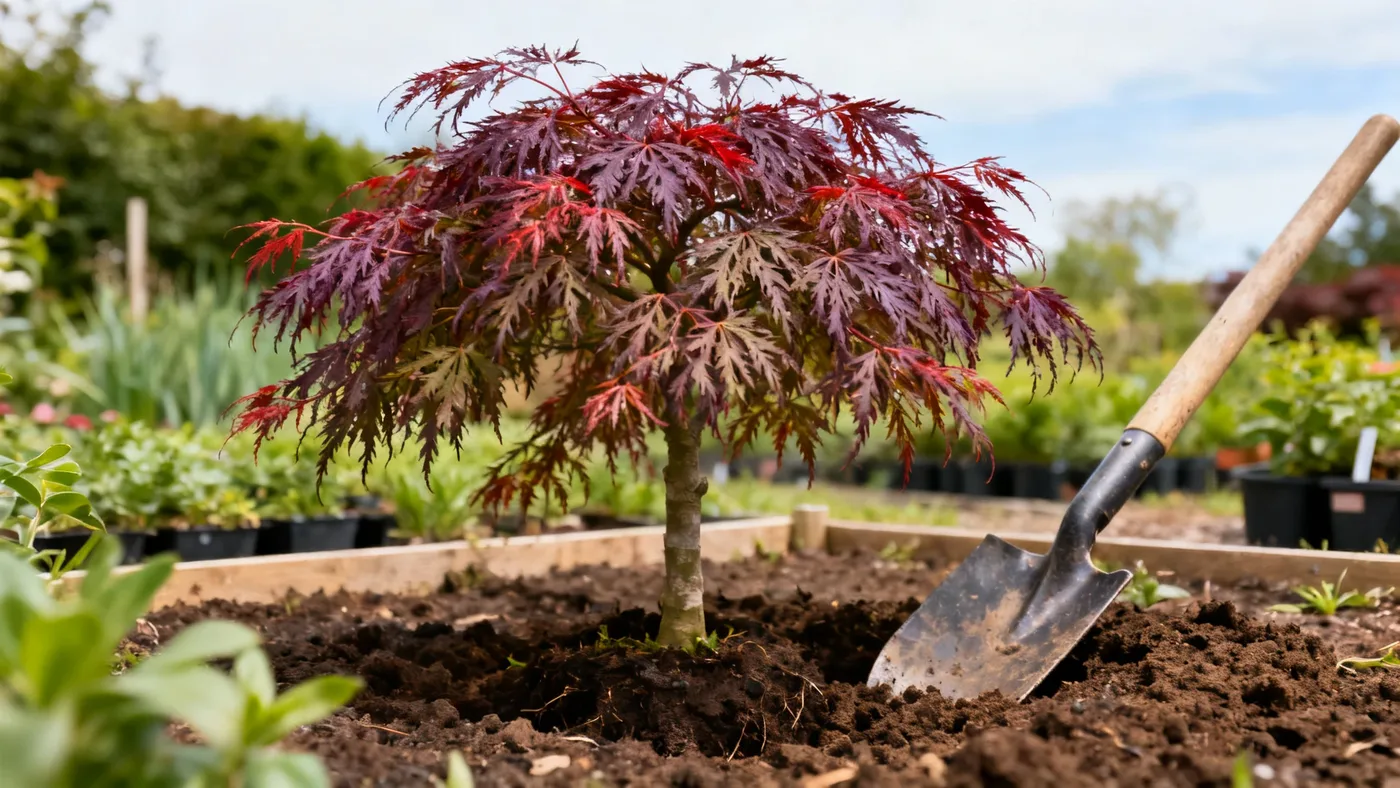
Crimson Queen is the cultivar with the most consistent track record and the widest commercial availability. It emerges in spring as deep red-purple and holds that rich color through the growing season, though in hot, sunny climates, the foliage can shift toward bronze-green by midsummer. This is purely environmental; it's not a defect.
For sizing expectations, plan on 8–10 feet tall over 15–20 years, with a spread of 10–12 feet. That width is key: Crimson Queen's graceful weeping branches extend outward as much as they cascade down, so it needs space. Growing at a slow, steady 6–12 inches per year, it won't outpace your patience but won't stay small forever, either.
Crimson Queen thrives in USDA zones 5–8, with zone 9 possible if you provide afternoon shade. It prefers rich, well-drained loam with a slightly acidic to neutral soil pH around 5.5–6.5. Regular, consistent moisture is non-negotiable; once established, it tolerates moderate drought better than some maples, but extended dry spells will cause leaf scorch.
The signature moment comes in fall, when the foliage transforms to brilliant crimson or scarlet red. Spring flowers are inconspicuous reddish-purple; they're ornamentally insignificant but do attract a few bees.
Tamukeyama: The Alternative
Tamukeyama is a second-tier availability cultivar that shares the same weeping laceleaf genetics as Crimson Queen. Where Tamukeyama distinguishes itself is in color retention: some growers report that it holds red foliage more consistently through summer heat, though this varies by site and season. It also tends toward a slightly more compact or refined branch structure in some conditions, though mature sizes are comparable.
Tamukeyama performs across the same hardiness range as Crimson Queen (roughly zones 5–8) and demands the same soil and water conditions: rich, well-drained, slightly acidic, and regular moisture. Like Crimson Queen, it benefits from afternoon shade in hot-summer regions.
The trade-off: Tamukeyama is less widely stocked by nurseries, so sourcing can be more difficult and potentially more costly. Some growers report that it arrives less vigorous in a container than Crimson Queen, though this is not universal.
Pros and Cons
Crimson Queen Advantages
- Readily available. You'll find it at most quality nurseries in zones 5–8.
- Proven performance. Decades of landscape use have proven its hardiness and habit.
- Graceful weeping form. Cascading branches are naturally elegant without heavy pruning.
- Brilliant fall color. Crimson to scarlet red is as good as Japanese maples get.
- Moderate establishment. Once you get it established with consistent moisture, it settles in well.
Crimson Queen Disadvantages
- Foliage can bronze in summer heat. In hot, sunny sites, red foliage may shift toward bronze-green mid-season. This is not damage, but it changes the visual effect.
- Requires afternoon shade in warm climates. Zone 9 plantings and southern zone 8 sites need shade to prevent leaf scorch.
- Large mature spread. At 10–12 feet wide, it's not for small spaces.
- Slow growth. At 6–12 inches per year, it takes patience to reach maturity.
- Water-dependent. It's not drought-tolerant; drought stress causes leaf scorch.
Tamukeyama Advantages
- May retain red foliage longer into summer. Some reports suggest better color hold through heat, though this is site-dependent.
- Possibly more refined branching. In some conditions, it exhibits tighter, more delicate branch structure.
Tamukeyama Disadvantages
- Harder to source. Not every nursery carries it; you may pay a premium or wait for special orders.
- Less proven in landscape trials. Fewer long-term plantings mean less collective data on regional performance.
- Same size and site demands. It still needs 10–12 feet of space, afternoon shade in hot climates, and consistent moisture.
Which Should You Plant? Best-Use Guide
Choose Crimson Queen if you:
- Want a proven, readily available weeping red maple.
- Prefer to shop locally and avoid shipping delays.
- Are comfortable with the possibility of summer color shift in hot sites (bronze-green is normal and harmless).
- Value consistent fall color as your main ornamental moment.
- Want a tree you can reference against years of established plantings and care guides.
Choose Tamukeyama if you:
- Live in a persistently hot climate and want to maximize red summer foliage retention.
- Have a budget for special-order plants and the patience for a longer sourcing timeline.
- Prefer a potentially more refined branching structure (though this varies).
- Are willing to experiment with a less-common cultivar in a lower-risk location first.
Skip both if you:
- Have less than 10 feet of horizontal space. These are wide trees; cramming one into a tight corner will force heavy pruning and ruin the natural weeping form.
- Cannot commit to regular water in summer. Drought stress on these maples triggers leaf scorch, and recovery takes years.
- Live consistently below zone 5 or above zone 9 without substantial afternoon shade.
The Verdict
If you're standing in the nursery with both available, Crimson Queen is the safer, simpler choice for most home gardeners. It's dependable, easy to find, and lives up to years of landscape trials. Its mid-summer color shift in hot sites is not a flaw; it's normal physiology and doesn't diminish its fall spectacular.
Tamukeyama makes sense only if you live in a hot climate, have sourcing access, and want to prioritize summer red foliage retention as your primary goal. For everyone else, Crimson Queen delivers everything the cultivar promises without the premium price or sourcing headaches.
Both are excellent maples. The choice comes down to site conditions, local availability, and whether you're optimizing for summer color or accepting normal seasonal changes.
Quick Reference Checklist
| Decision Point | Crimson Queen | Tamukeyama |
|---|---|---|
| Zones 5–8 hardy? | ✓ Yes | ✓ Yes |
| Needs 10–12 ft width? | ✓ Yes | ✓ Yes |
| Requires afternoon shade in heat? | ✓ Yes, in zone 9 or hot zone 8 | ✓ Yes, generally |
| Easy to find at local nurseries? | ✓ Usually | ✗ Often requires special order |
| Proven 20+ year track record? | ✓ Yes | △ Moderate |
| Tolerates established drought? | △ Moderate, after establishment | △ Moderate, after establishment |
| Fall color outstanding? | ✓ Crimson to scarlet | ✓ Crimson to deep red |
For detailed care after planting, see our complete growing guide for Crimson Queen. If you're curious about mature sizing in your specific climate, check our guide on how big Crimson Queen grows.