Crimson Queen vs Red Dragon Japanese Maple: Which to Plant?
"I'm holding a Crimson Queen in one hand and a Red Dragon in the other. Which one will I regret less?" We hear some version of that call every spring, and the honest answer is that the two trees are closer than most online comparisons suggest.
Both are red laceleaf Japanese maples with weeping, mounded form and finely cut leaves. The differences sit in how the branches carry themselves, how the summer color reads, and how forgiving each tree is of sun and cold. Match the tree to your site and either one can look good for decades.
Below, you'll find out all about how these two maples compare, including habit, mature size, summer color, sun, winter hardiness, cost and which one suits your yard.
Crimson Queen Japanese Maple and Red Dragon Habit
Shape is the first thing you notice when the two pots sit side by side, so we start there.
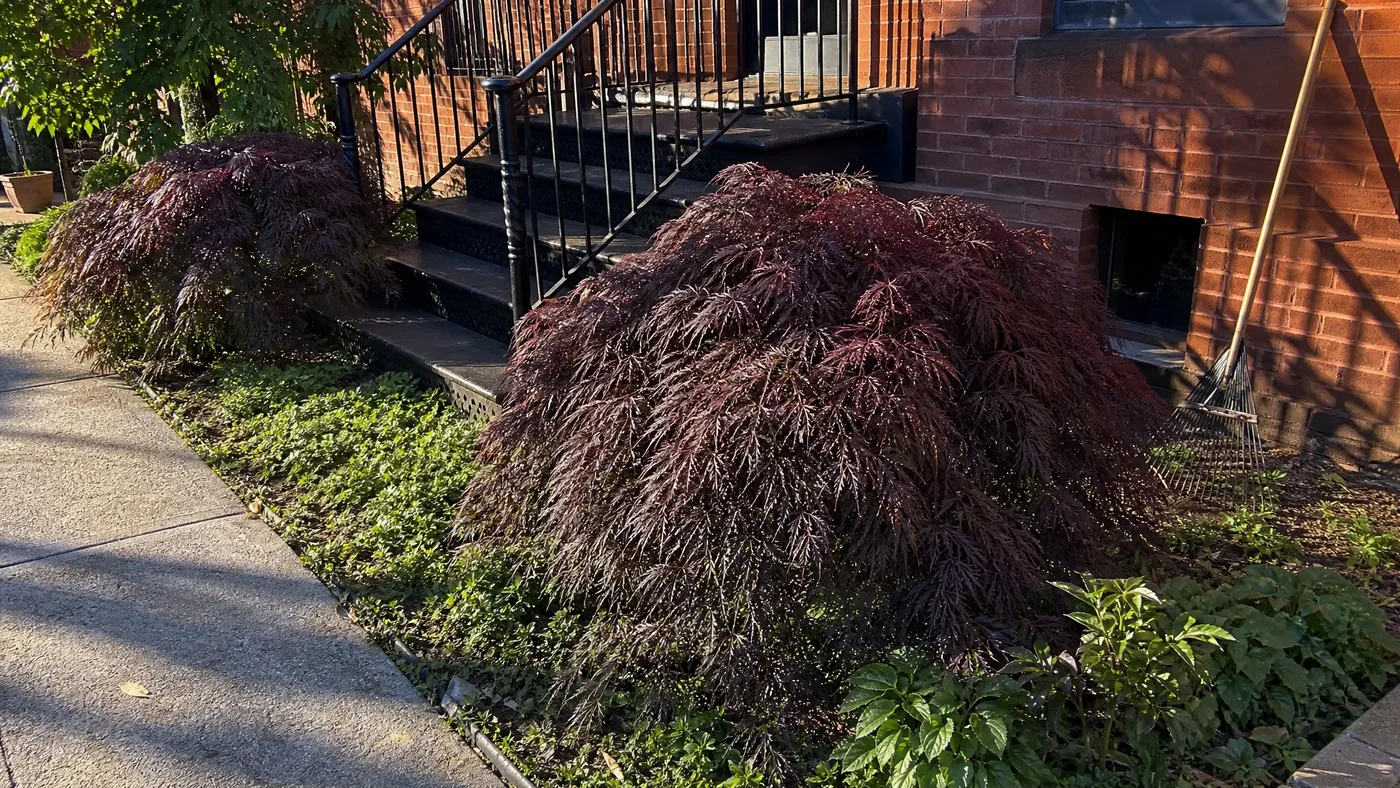
Crimson Queen is a medium-sized deciduous shrub that is arching in habit. The branches leave the center and then bend outward and downward, so the tree reads as a flowing, cascading dome. Over the years the outer tips can reach the ground, and the framework of the branches stays visible through the lace.
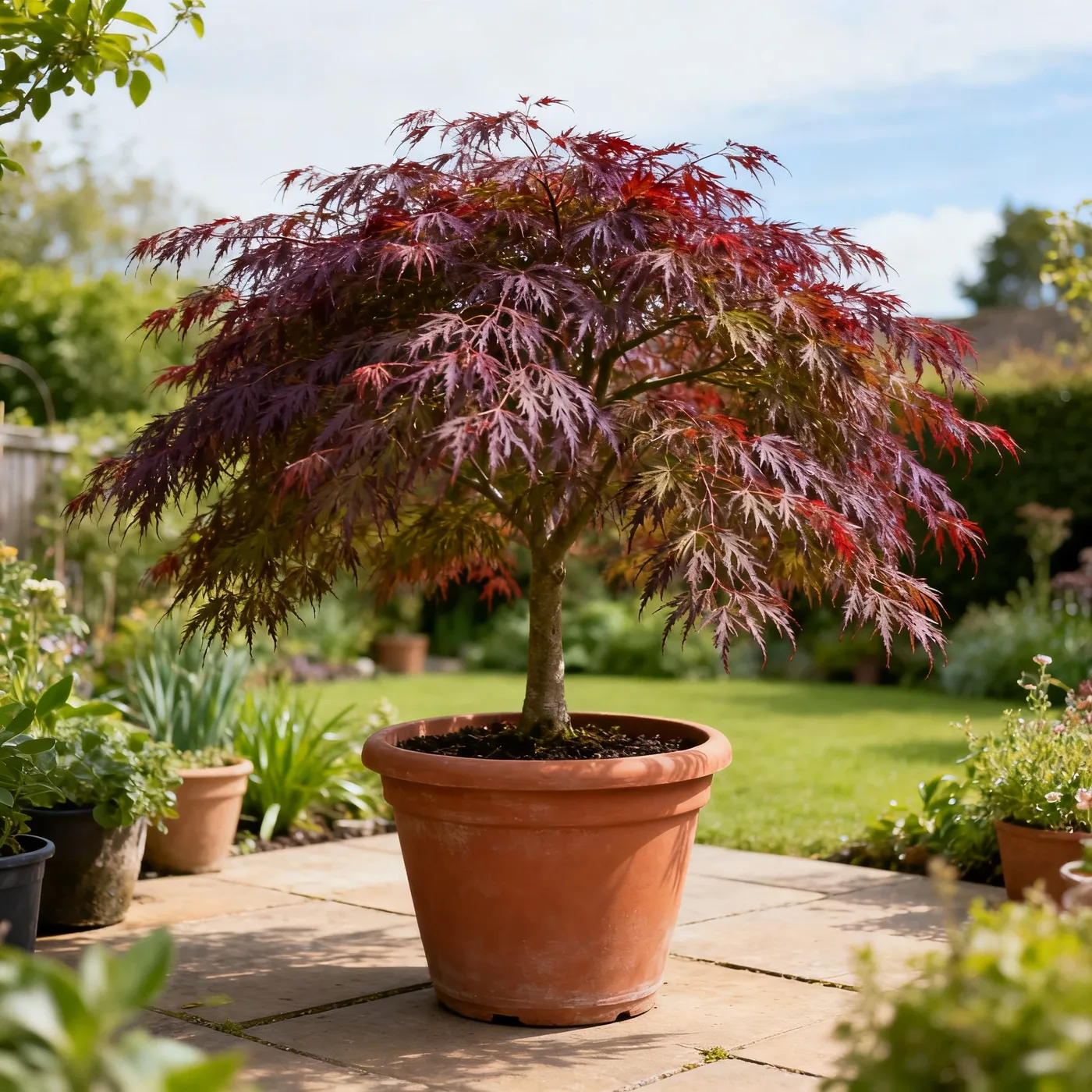
Red Dragon is a strong-growing, shrubby tree with weeping branches and a mounding habit. It also forms a compact, well-branched, cascading mound. Put plainly, Red Dragon tends to look rounder and tighter, while Crimson Queen looks looser and more draped.
Neither tree is upright, and neither will give you a trunk to walk under without help. Both are slow to moderate growers like the species they come from, so you will watch the shape develop over years rather than seasons.
Shape also affects how you prune. Crimson Queen needs little more than removing dead or crossing wood, and our pruning guide shows how to do that without flattening the cascade. A tighter mound like Red Dragon is just as easy to keep tidy, but any heavy cutting shows sooner on a compact tree.
Our verdict on form: choose Crimson Queen if you want the graceful, spilling look, especially over a low wall, a bank or the edge of a path. Choose Red Dragon if you want a neat, rounded mound that sits quietly in a bed. If you cannot decide, ask yourself whether you want to see branches or a cushion of foliage.
Mature Size and the Room Each Needs
Size is where competitors claim the biggest gap, but the published numbers show a much smaller one.
Crimson Queen reaches a height and spread of 1.5–2.5 meters, which is about 5–8 feet, over 10 to 20 years. It is also described as growing to only 10 feet tall and slightly wider. Those two figures bracket the real answer, so plan on 8 feet and be prepared for 10.
Red Dragon matures to a height of 8 feet with a similar spread. That works out to about 2.5 meters, or roughly 8 feet. So Red Dragon sits near the top of Crimson Queen's range and just under the taller estimate.
Give either tree a circle of ground about as wide as its mature spread, measured from the planting spot to the nearest wall, walkway or neighboring shrub. Because the branches weep, a tree crowded against a path ends up with tips trampled or clipped. Our guide to Crimson Queen's mature size goes deeper on timing.
Remember that these are mature figures for slow growers. A young tree in the first few years will look small in the bed, and it is tempting to plant it close to the house or a path to fill the gap. Resist that, because you will either move a large tree later or prune it to fit.
Our verdict on space: this is close to a tie. Crimson Queen may end up a little bigger, so if your spot is genuinely tight, Red Dragon is the safer bet. If you have 8 to 10 feet to spare, size should not decide this for you.
Which Red Holds Longer Through July
Summer color is the argument we hear most often, so here is what the sources actually say.
Crimson Queen leaves unfold crimson-red and very lacy. The finely dissected burgundy foliage retains color all summer and turns scarlet in fall. The mature leaves are deep reddish-purple, so the tone leans toward purple once the leaves have settled.
Red Dragon emerges bright cherry red on purple leaf stalks and changes to burgundy red in summer, then crimson in fall. Its color holds until autumn. On paper, that makes Red Dragon the redder of the two in July and Crimson Queen the darker, more purple one.
Nothing suggests one tree fades faster than the other. When a laceleaf looks bronzed or washed out by midsummer, the cause is almost always the site, which we cover in the next section. Dry soil and hot afternoon exposure dull either tree.
If you want to know what each does once the heat is over, our fall color guide covers Crimson Queen in detail. Both end the year in warm reds, though Crimson Queen's fall leaves range from scarlet to a deep reddish purple.
Our verdict on staying red: Red Dragon if you want a true red-leaning burgundy through summer. Crimson Queen if you like a deeper, wine-dark tone against green neighbors. Either one will hold its color far better in the right spot than the other does in the wrong one.
Sun Tolerance for Crimson Queen Japanese Maple
Both trees want the same kind of spot, but the details of how they handle sun are worth spelling out.
How Much Sun Crimson Queen Takes
Crimson Queen suits full sun to part shade, and its leaf color is best in partial shade, although full sun can be tolerated. Scorch shows up as crisp brown leaf edges when the soil dries or the exposure is too harsh.
Customers usually ask us whether full sun will fade it. The trees that struggle are rarely the sunny ones. They are the ones sitting on dry, unmulched ground with no relief after midday. Morning sun with afternoon shade is the arrangement we recommend, and our light needs guide covers it in full.
Where Red Dragon Differs
Red Dragon gets almost the same advice, with one stricter condition: leaf color is best in partial shade, although full sun can be tolerated if soil is reliably moist. That wording does not describe a tree that shrugs off sun better than Crimson Queen.
The claim that Red Dragon is the sun-lover simply does not hold up in the published guidance. Both trees take sun when the roots stay evenly moist, and both scorch when they do not.
Our verdict on sun: a tie. If your site is hot and you cannot water reliably, pick a spot with afternoon shade before you pick a cultivar. If you can give that shade, both will color well.
Winter Hardiness in Crimson Queen Japanese Maple
Cold is the other place where buyers expect a winner, and again the numbers are nearly identical.
NC State rates the species 5a through 8b. Both trees share the same cold limit on paper, so zone alone will not separate them.
The bigger winter risk for either one is not a deep freeze but a late frost. NC State notes that frost damage, especially from late frosts, can occur on the species. A warm spell that pushes out tender red leaves followed by a hard night will burn new growth on both trees.
In zone 5, choose a spot out of the coldest wind, keep the roots mulched, and wait until the tree has fully leafed out before trimming any dead twigs. If you are colder than zone 5, check with your local extension service before buying either tree. Our hardiness zone guide covers how to read your own microclimate.
Our verdict for colder zones: neither tree has an edge. Site selection matters more than which name is on the tag, and a sheltered zone 5 corner beats an exposed zone 6 hilltop.
What Each Tree Costs at the Nursery
Prices change with season, supplier and pot size, so we will not quote numbers that will be out of date by next month.
Many sellers price Crimson Queen a little lower than Red Dragon, which is where the "cheaper tree" idea comes from. The gap, where it exists, is usually small next to the difference between pot sizes. A larger pot means more years of growth behind the tree, and that is where most of the money goes.
What we tell customers is to compare pot sizes first and names second. A bigger Crimson Queen often costs about the same as a smaller Red Dragon, and the older tree gives you an established branch structure sooner. Our pot size buying guide lists what to check on each tree, from the graft union to the branch tips.
Also compare what the price includes. A tree that arrives with healthy roots and undamaged branches saves you a season of recovery, which is worth more than a few dollars off the tag.
Our verdict on value: buy the largest pot you are comfortable with, and let the site choose the cultivar. Do not choose a tree you like less to save a small amount, because you will look at it every day for twenty years.
Matching Crimson Queen Japanese Maple to Your Site
Here is our pick for each common situation, starting with the sunniest yards and ending with the coldest.
Sunny Yard
Choose either tree, but only if you can provide afternoon shade and steady moisture. We lean toward Red Dragon here if you want the color to stay red.
Shaded Yard
Part shade suits both. Crimson Queen is our pick, since its color is best in partial shade and its arching form shows off beneath taller trees.
Small Yard
Red Dragon, with its tighter mound and 8-foot ceiling, is the safer fit. Crimson Queen can reach 10 feet.
Cold Zone
Both are zone 5 trees. Pick the more sheltered position, and choose Crimson Queen if you want the form we like best.
Either Maple Will Reward a Well-Matched Site
Crimson Queen and Red Dragon are nearer to each other than the internet suggests. Crimson Queen cascades and leans purple, Red Dragon mounds and leans red, and the sun, size and cold numbers barely separate them. If your site fits, either tree will be a good choice, and if you are unsure, ask us.
Crimson Queen Japanese Maple
Nursery-grown Crimson Queen Japanese Maple in sizes from 1 Gallon, shipped to your door.
From $59.97
Shop Now →Every Crimson Queen we ship is grown on our own farms, potted with a healthy root system and packed so the branches arrive undamaged and ready to plant.