Crimson Queen Japanese Maple FAQ: 12 Questions Answered
Basics and Identification
What exactly is a Crimson Queen Japanese Maple?
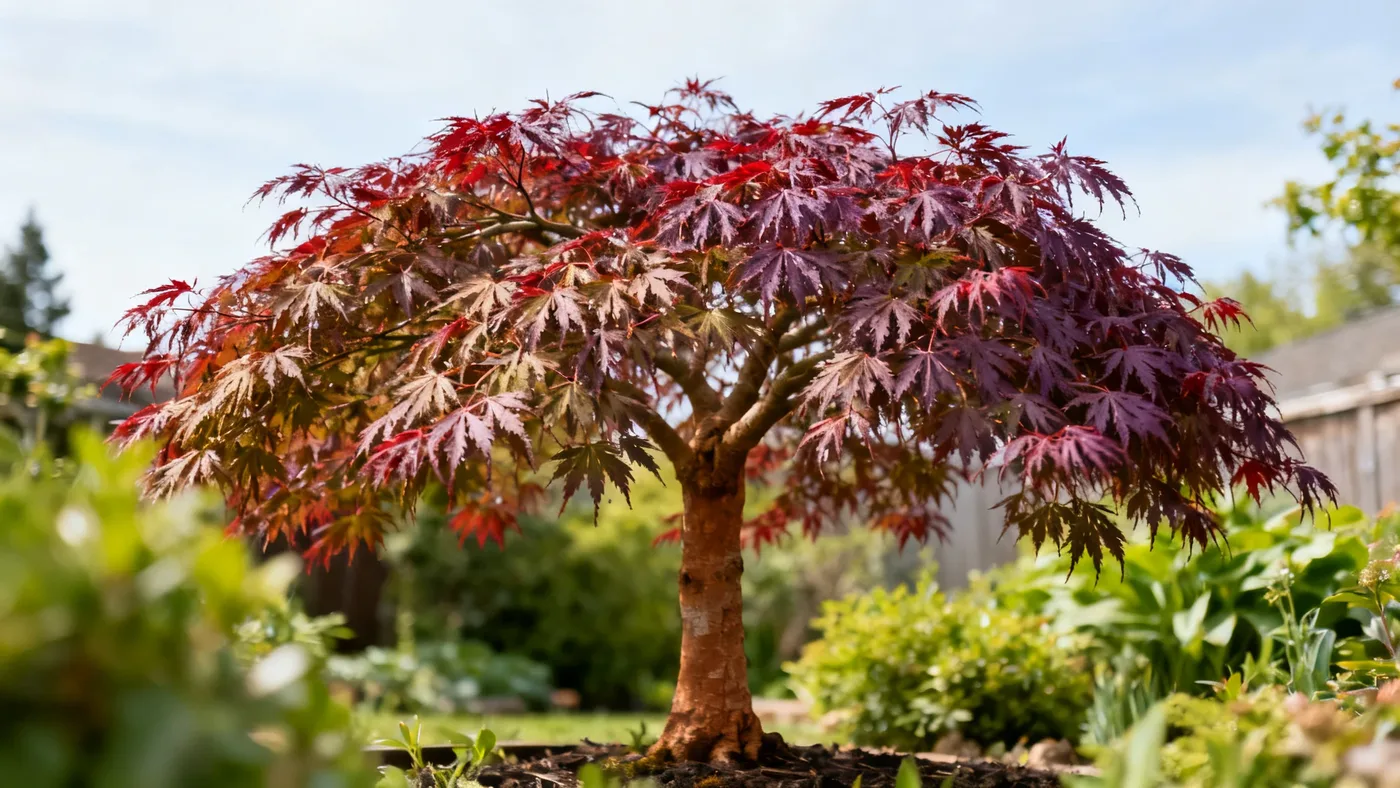
Crimson Queen Japanese Maple (Acer palmatum var. dissectum 'Crimson Queen') is a weeping laceleaf cultivar grown for its finely dissected, deep red foliage and graceful cascading form. It's a deciduous shrub to small tree that brings fine texture and year-round visual interest to gardens, with spring blooms, summer color, and dramatic fall crimson before winter's elegant branch structure shows through.
How large does Crimson Queen Japanese Maple grow?
Mature plants reach 8 to 10 feet tall and 10 to 12 feet wide over 15 to 20 years, typically wider than tall due to the weeping habit. Growth is slow at roughly 6 to 12 inches per year, so a young plant takes patience to become a landscape focal point.
How long does a Crimson Queen Japanese Maple live?
Crimson Queen Japanese Maples are long-lived trees, often persisting 50 to 100+ years with proper siting and care. Their slow growth means they reward patience with decades of ornamental value.
Growing Conditions and Site Selection
Does Crimson Queen Japanese Maple need full sun or partial shade?
Crimson Queen thrives in full sun to partial shade, but benefits from afternoon shade in hot-summer climates to prevent leaf scorch, where consistent heat and low humidity can damage the delicate foliage. In mild regions, full sun intensifies the red color; in intense heat, afternoon protection keeps leaves supple and rich.
What soil do Crimson Queen Japanese Maples prefer?
These maples need rich, well-drained loam high in organic matter, with a soil pH of 5.5 to 6.5 (slightly acidic to neutral). Avoid heavy clay or soggy ground, as poor drainage leads to root rot and decline.
Can Crimson Queen Japanese Maple tolerate drought?
Crimson Queen has low to moderate drought tolerance once established and is not drought-proof. Regular, consistent moisture during the growing season keeps foliage healthy; prolonged dry spells stress the tree and increase pest and disease susceptibility.
Is Crimson Queen Japanese Maple salt-tolerant?
No, this cultivar has low salt tolerance. If you live near coastal areas, roads treated with de-icing salt, or alkaline soil, site your Crimson Queen carefully and consider regular rinsing if salt spray is unavoidable.
How much space does Crimson Queen Japanese Maple need?
Space plants 8 to 12 feet from other trees, structures, and hardscape to accommodate their mature spread without crowding. The weeping form will drape elegantly, so ensure clear space around the crown.
Planting and Care
When is the best time to plant Crimson Queen Japanese Maple?
Plant in early spring or early fall, avoiding peak summer heat. Spring planting gives the tree a full growing season to establish roots before winter; fall planting works well in mild zones but requires consistent fall moisture.
How do I plant Crimson Queen Japanese Maple correctly?
Follow the detailed steps in our complete planting guide. In brief, prepare a hole 2 to 3 times wider than the root ball, mix compost into native soil, set the tree at the same depth it was growing in its container, backfill gently, and water thoroughly to settle the soil.
How much water does Crimson Queen Japanese Maple need?
Water regularly to keep soil consistently moist but not waterlogged, especially during the first 2 to 3 years and during dry spells. A 2-to-3-inch mulch layer around the base (kept back from the trunk) conserves moisture and moderates soil temperature.
Should I fertilize my Crimson Queen Japanese Maple?
Apply a light application of balanced, slow-release fertilizer in early spring as growth begins. Avoid high-nitrogen feeds, which push weak, soft growth attractive to pests and prone to frost damage.
How much pruning does Crimson Queen Japanese Maple need?
Pruning should be minimal; the tree's naturally graceful weeping form is its main ornament when left alone. Prune in late fall to midwinter dormancy to remove only dead, crossing, or downward-growing interior branches that impede the cascading habit.
Hardiness and Regional Challenges
What USDA hardiness zones can grow Crimson Queen Japanese Maple?
Crimson Queen is hardy in USDA zones 5 to 8, and some growers extend it to zone 9 with afternoon shade and consistent summer moisture. Zone 5 gardeners may see occasional winter dieback on young plants, but established trees recover well in spring.
Can I grow Crimson Queen Japanese Maple in zone 9?
Zone 9 is at the limit of hardiness and requires afternoon shade, well-amended soil, consistent watering, and a sheltered microclimate to thrive. Afternoon shade is non-negotiable in zone 9, as intense heat triggers leaf scorch and stress.
Why are the leaves turning brown or crispy?
Leaf scorch is usually environmental, not a disease: excessive sun combined with wind, drought, or low humidity damages the delicate foliage. Increase afternoon shade, ensure consistent soil moisture, mulch, and reduce air movement if possible.
Pests, Diseases, and Troubleshooting
What pests affect Crimson Queen Japanese Maple?
Common pests include aphids, scale insects, Japanese beetles, borers (on stressed trees), and spider mites. Regular inspection and prompt removal of affected branches control most populations; avoid overfertilizing with nitrogen, which weakens the tree.
What diseases should I watch for?
Verticillium wilt, anthracnose, root rot (in poorly drained soil), and canker diseases are the main threats. Proper drainage, air circulation, and prompt removal of infected material slow disease spread; verticillium is soil-borne and can be fatal, so avoid replanting in contaminated spots.
My Crimson Queen seems to be declining or wilting. What went wrong?
Check soil moisture (too wet or too dry), inspect for scale insects and borers on the trunk and branches, confirm the planting depth (girdling roots occur if planted too deep or left in a nursery pot too long), and consider verticillium wilt if the tree is in a problem soil. Move the tree to better light and more consistent moisture if possible.
Landscape Use and Companion Planting
Is Crimson Queen Japanese Maple suitable for container growing?
Yes, Crimson Queen is well suited to large containers with excellent drainage and rich potting soil. In colder zones (5 and 6), container-grown plants need extra winter protection for the roots, such as moving to a sheltered spot or wrapping the container with insulation.
Can Crimson Queen Japanese Maple be planted near water features?
Yes, its weeping form is stunning reflected in ponds or positioned at a poolside edge. Ensure the soil remains well-drained and not saturated, even near water; standing water invites root rot.
What plants pair well with Crimson Queen Japanese Maple?
Hostas, ferns, azaleas, rhododendrons, hydrangeas, and heuchera complement its fine texture and shade tolerance. These companions work well in the dappled light beneath the maple's canopy.
Appearance and Seasonal Changes
What color does Crimson Queen Japanese Maple turn in fall?
Foliage transforms to brilliant crimson or scarlet red in autumn, providing intense seasonal color. The lacy leaves hold this display for several weeks before dropping to reveal the elegant branch structure underneath.
Does Crimson Queen Japanese Maple produce flowers?
Yes, small reddish-purple flowers bloom in spring (April to May), but they are not ornamentally significant and easily overlooked. The real beauty lies in the foliage and form.
Quick Reference Guide
| Attribute | Details |
|---|---|
| Hardiness Zones | 5 to 8 (zone 9 with afternoon shade) |
| Mature Size | 8 to 10 feet tall, 10 to 12 feet wide |
| Growth Rate | Slow, roughly 6 to 12 inches per year |
| Light | Full sun to partial shade; afternoon shade in hot climates |
| Soil | Rich, well-drained loam; pH 5.5 to 6.5 |
| Water Needs | Regular, consistent moisture; not drought-tolerant |
| Spacing | 8 to 12 feet from other trees and structures |
| Planting Season | Early spring or early fall |
| Pruning | Minimal; late fall to midwinter only |
| Fertilizer | Light, balanced, slow-release in early spring |
| Lifespan | 50 to 100+ years with proper care |
| Toxicity | Not toxic to pets or people |
| Container Suitable | Yes, with excellent drainage |
For more detailed guidance, see our complete growing guide on Crimson Queen Japanese Maple care and cultivation.